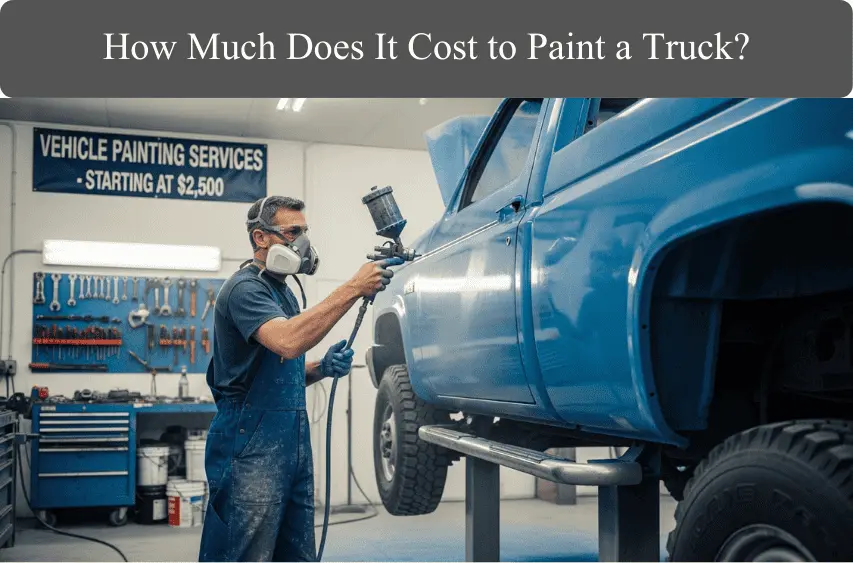
How Much Does It Cost to Paint a Truck?
Truck owners know that paint serves two vital purposes. It makes your rig look professional, and more importantly, it stops rust from destroying the metal. But when the clear coat starts peeling or the color fades, you need a solution. The first question everyone asks is about the price. The honest answer is that it depends entirely on your goals. You might pay as little as $500 for a quick refresh or over $20,000 for a showroom-quality restoration. This guide breaks down exactly what you get for your money so you can make the right investment for your vehicle.
Average Cost to Paint a Truck: A Price Breakdown
If you call three different auto body shops, you will likely get three very different quotes. This happens because “painting a truck” can mean anything from a quick spray to a month-long restoration. To help you budget, we categorize these costs into three main tiers.
Basic “Economy” Paint Jobs ($500 – $1,000)
This tier is often called the “scuff and shoot” service. You typically find these prices at large budget chains. The process is fast and simple. The shop does minimal preparation work. Instead of removing trim, handles, or lights, they simply tape over them. They usually spray a single layer of synthetic enamel paint.
This option works if you just want an old work truck to look one solid color again. However, you should manage your expectations. The finish often has a texture similar to an orange peel, and you will likely see tape lines around the windows. It looks okay from twenty feet away, but it is not built for longevity.
Standard “Driver” Quality Service ($1,000 – $4,000)
Most truck owners find their sweet spot in this tier. A standard paint job strikes a balance between cost and quality. At this level, the shop takes the time to sand down the old paint properly. They will treat minor rust spots and fix small dents before painting begins.
Crucially, they often remove bumpers, lights, and door handles rather than taping over them. This ensures you don’t see messy paint lines on your rubber seals. Shops in this range typically use higher-quality urethane paints with a separate clear coat. The result looks very close to a factory finish and holds up well against UV rays and road debris.
Showroom & Restoration Quality ($5,000 – $20,000+)
This tier is for enthusiasts and show truck builders. If you are restoring a classic diesel or building a custom rig, this is the service you need. The shop often sands the body down to bare metal to eliminate every imperfection.
They fix every wave and ripple in the steel. The painting process involves multiple coats of high-quality primer, base coat, and clear coat. After the paint cures, they wet-sand and buff the finish until it looks like glass. This labor-intensive process can take weeks, but the results are flawless.
Key Factors That Influence Truck Painting Costs
Why does the price gap exist? It ultimately comes down to time and materials. A truck is a large, complex vehicle, and specific details drive up the final bill.
Size and Surface Area
A compact pickup requires significantly less paint than a crew cab dually with an 8-foot bed. Paint materials are expensive, and surface area matters. If your truck has a high roof, extended cab, or wide fenders, the shop needs to purchase more gallons of primer, base, and clear coat. Fleet owners might secure a volume discount, but individual owners pay for every square foot of coverage.
Truck Architecture: Body-on-Frame Complexity
Cars and trucks are built differently, and this directly affects the painting process. Most modern cars utilize a unibody construction, meaning the frame and body are a single piece. Trucks are different. They usually consist of a separate cab and bed mounted on a steel ladder frame.
To do a proper color change on a truck, the shop often needs to lift the bed off the frame. This allows them to paint the back of the cab and the front of the bed, areas that are otherwise hidden. This extra labor adds to the cost. If you are unsure about how your vehicle is built, understanding the difference between body-on-frame vs unibody structures helps explain why truck labor runs higher than standard car painting.
The Condition of the Vehicle and Prep Work
The condition of your truck’s body is perhaps the biggest variable in the final price. Paint cannot stick to rust, and it cannot hide dents. If you paint over rust, it will bubble up and ruin the new finish within months.
Shops charge for the time it takes to fix these issues. If your wheel wells are rusting or your rocker panels have rot, the technician must cut out the bad metal and weld in new patches. Even minor door dings require filling and sanding. If your clear coat is peeling extensively, the shop has to sand the entire panel down to a smooth surface. This preparation work often costs more than the actual painting.
Paint Quality: Single Stage vs. Two-Stage Urethane
The type of paint you choose also dictates the budget. Cheaper estimates usually involve “single-stage” paints. This product mixes the color and the glossy clear coat into one liquid. It is faster to apply, which saves money, but it is generally less durable.
Higher-end jobs use a “two-stage” or “base-coat/clear-coat” system. First, the painter applies the color (base). Once that dries, they apply a separate layer of clear coat. This method provides much better UV protection and gives the truck a deeper, wetter shine.
Color Changes and Door Jambs
Refreshing your truck’s current color is the most affordable option. The painter can tape off the door jambs and under the hood because the old paint in those hidden areas will match the new paint on the outside.
Changing the color completely is a different story. If you want to go from white to metallic blue, the shop has to paint the “jambs.” This includes the inside of the doors, the door sills, and the underside of the hood. If they don’t, you will see the old white paint every time you open the door. This additional labor can increase the price by 20% to 30%.
Truck Painting vs. Car Painting Costs
Many owners assume that painting a truck costs roughly the same as painting a sedan, but the bill is almost always higher for trucks. The primary reason is simply the sheer volume of materials required.
Material Volume and Labor Hours
A pickup truck has more vertical surface area than a car. The bed alone adds significant square footage. Furthermore, trucks often have textured bed liners or plastic rail caps that need to be carefully masked off or removed. A painter might use three quarts of paint for a sedan but over a gallon for a full-size truck.
Comparison of Base Costs
The labor involved in prepping a truck bed—sanding around tie-down hooks and maneuvering around the tailgate—is time-consuming. Because of these factors, the starting price for trucks is consistently higher than smaller vehicles. If you are comparing quotes and want to understand the baseline difference, it helps to look at how much does it cost to paint a car for a standard sedan. You will typically find that truck estimates run $500 to $1,500 higher than car estimates for the same quality of work.
DIY vs. Professional Truck Painting: Which is Right for You?
With professional labor rates rising, many truck owners wonder if they should tackle the job themselves. This is a valid option, but you need to be realistic about the results.
The DIY Route: Costs and Realities
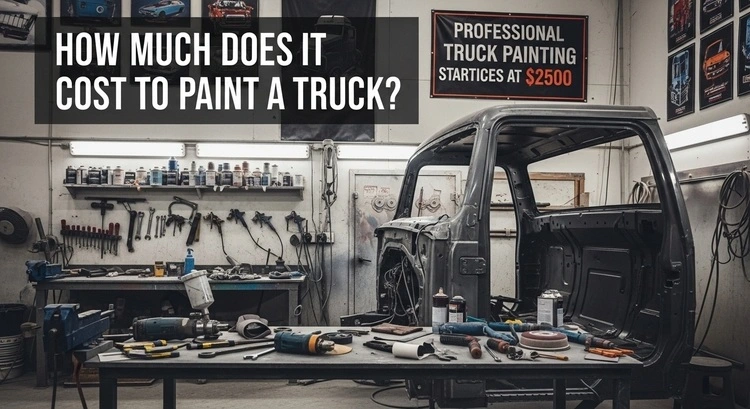
Painting your truck at home is the cheapest method by far. You can expect to spend between $200 and $600 on materials. This budget covers sandpaper, masking tape, primer, paint, and clear coat. However, this price assumes you already have the necessary equipment.
To do this properly, you need an air compressor capable of continuous airflow and an HVLP (High Volume Low Pressure) spray gun. You also need a clean, dry space to work. Painting outside is risky because wind, dust, and bugs can ruin the wet finish instantly. While you save thousands of dollars on labor, the tradeoff is that you likely won’t achieve a perfectly smooth, factory-level finish without a professional paint booth.
DIY Alternatives: Roll-on Bedliners
If handling a spray gun sounds intimidating, many truck owners are now turning to roll-on bedliners for the entire exterior. Products like Durabak or Raptor Liner offer a unique, rugged aesthetic that suits off-road rigs perfectly.
The beauty of this method is its simplicity. You don’t need a clean room or expensive air compressors. You simply scuff the surface, clean it, and roll the material on with a textured roller. The finish is incredibly tough, scratch-resistant, and thick enough to hide minor dents and dings that regular glossy paint would magnify. It is a practical, low-maintenance solution for work trucks and trail vehicles.
Exploring Paint Alternatives and Customizations
Painting isn’t the only way to change your truck’s look. Modern technology offers alternatives that might suit your needs better than a traditional respray.
Vinyl Wraps vs. Custom Paint Jobs
Vinyl wrapping has exploded in popularity. Instead of spraying liquid paint, a shop applies a large, adhesive vinyl sheet over your existing paint. A high-quality full truck wrap typically costs between $2,500 and $5,000.
While this price rivals a standard paint job, wraps offer distinct advantages. They are removable, meaning you can revert to the factory color whenever you want. This preserves your original paint—and your resale value. Wraps also allow for complex graphics or camouflage patterns that would cost a fortune to airbrush. However, keep in mind that vinyl does not last as long as paint; you will likely need to replace it after five to seven years.
Custom Colors and Legal Restrictions
If you decide to go with a custom paint job or a unique wrap, you have endless options, from matte black to color-shifting pearlescent. However, before you commit to a wild design, be aware of local laws.
Certain color schemes, especially those mimicking emergency vehicles or using highly reflective chrome finishes, can get you pulled over. It is always smart to check what color is illegal to use on cars in your specific area to ensure your new look is street-legal.
Real-World Expectations: What Owners Say
Forums and enthusiast communities are full of real-world stories about truck painting costs. The general consensus confirms the “you get what you pay for” rule.
The “Budget” Experience
Owners who choose the cheapest economy options often report that the paint looks decent initially but may start to fade or chip after a few years. These jobs are generally considered perfect for a truck you plan to sell soon or a work truck that lives on a construction site.
The Restoration Experience
On the other hand, owners of older diesel trucks—like the 2nd Gen Dodge Rams—often spend $10,000 or more to restore their vehicles. They report that while the cost is high, the investment effectively gives them a “new” truck for a fraction of the price of buying a 2024 model. The value lies in the longevity of the repair, not just the cosmetic shine.
FAQs
A cheap paint job might last 3 to 5 years before fading. A professional job with high-quality urethane paint and clear coat can easily last 10 to 15 years or more if you wax it regularly and keep it clean.
Yes, but only if done well. A professional paint job can add thousands to the value of a well-maintained truck. However, a messy DIY job with overspray on the tires and windows can actually lower the value because buyers will suspect you are hiding damage.
For a basic respray, expect your truck to be gone for about a week. For a full color change or restoration work involving rust repair, the process often takes three to four weeks.
Final Thoughts
The cost to paint a truck is an investment in the vehicle’s future. Whether you need a quick $800 refresh or a $15,000 restoration, the key is to match your budget to your goals.
If you love your truck and plan to keep it for the long haul, saving up for a “standard” or “showroom” level job is usually the best financial move. We recommend getting written quotes from at least three different local shops. Ask to see examples of their previous work, check their reviews, and choose the team that gives you the most confidence in their process.