What Does R&R and R&I Mean On My Car Repair Estimate?
If you have ever looked at an auto body repair estimate, you probably felt like you were reading a secret code. You see lines of numbers, descriptions of parts you didn’t know existed, and a column full of acronyms. It can be overwhelming.
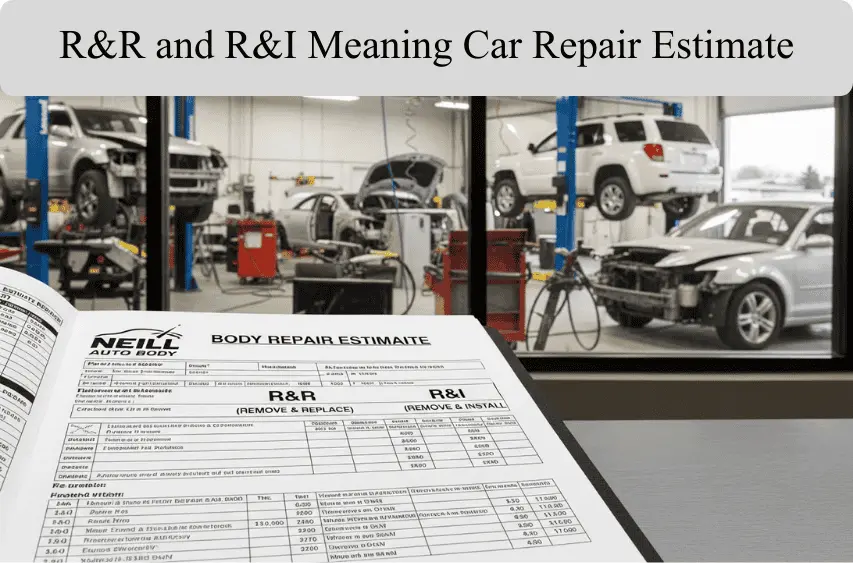
For most car owners, the biggest confusion comes from two very similar terms: R&R and R&I. While they look alike on paper, they mean very different things for your car and your wallet. Understanding these codes is the only way to know if you are paying for a new part or just paying for the labor to move an old one.
The Basics: Decoding Your Repair Estimate
The auto repair industry has changed dramatically over the last decade. Years ago, you could drive up to a shop, a mechanic would walk around your car, and give you a handwritten quote. Those days are gone. Modern vehicles are complex machines filled with sensors and advanced materials.
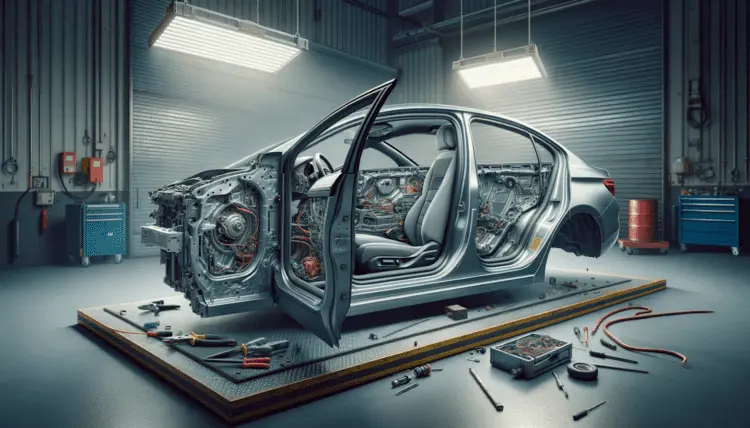
Today, a proper estimate—often called a “blueprint”—requires a technician to act more like a surgeon. They can’t just guess what is broken; they have to diagnose it. This usually involves a “teardown,” where they take apart the damaged area to see what is lurking underneath.
This diagnosis phase is where you will first see terms like R&R and R&I appear. These aren’t just billing codes; they are specific instructions that tell the technician exactly what to do with every bolt, bumper, and door handle on your vehicle.
Deep Dive: What Is R&R (Remove and Replace)?
R&R stands for Remove and Replace. This is the term you will see when a part is too damaged to be fixed. In this scenario, the technician removes the broken component from your vehicle, discards it, and installs a completely new replacement part in its place.
When you see R&R on your estimate, you are paying for two things: the cost of the new part and the labor time it takes to swap it out.
When is R&R Necessary?
Technicians don’t just choose to replace parts at random. There are specific guidelines they follow to decide if a part can be saved or if it needs the R&R treatment.
- Structural Damage: If a safety component, like a bumper reinforcement bar or a pillar, is crushed or cracked, it cannot be repaired. It must be replaced to ensure the car is safe to drive again.
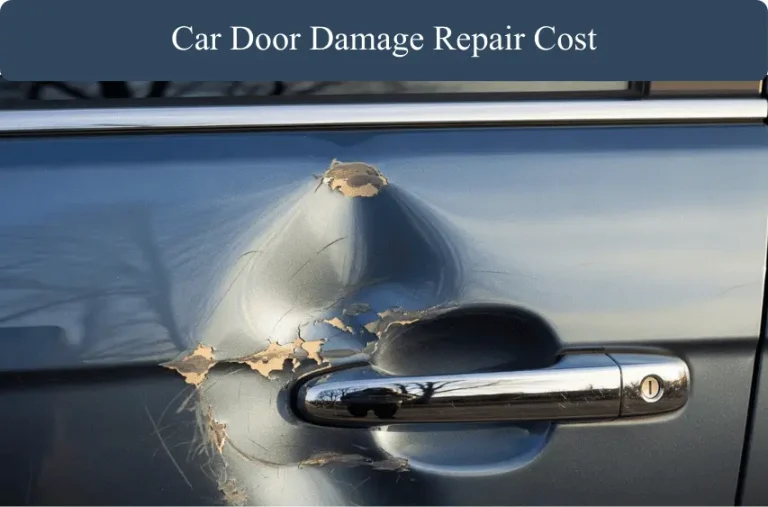
- Cost-Effectiveness: sometimes, labor is expensive. If a technician has to spend ten hours hammering out a dented door skin, the labor cost might be higher than simply buying a new door shell. This calculation plays a huge role in the final car door damage repair cost. If the repair takes too long, R&R becomes the smarter financial choice.
- One-Time Use Parts: Many modern cars use clips, fasteners, and adhesive emblems that are designed to break upon removal. These parts are strictly “one-time use” and will always be listed as R&R.
Deep Dive: What Is R&I (Remove and Install)?
R&I stands for Remove and Install. This is distinct from R&R because no new parts are purchased. Instead, the technician removes a part from your vehicle, sets it aside safely, and then reinstalls that exact same part later.
You might wonder, “Why would you take a part off if it isn’t broken?”
The answer usually comes down to access and quality. To fix a dent or paint a panel properly, obstacles need to be moved out of the way.

The Role of R&I in Quality Repairs
R&I is the mark of a high-quality repair shop. When a shop prepares to paint a car door, they have two choices. They can tape over the door handle and mirror (which leaves ugly tape lines and peeling paint later), or they can R&I those parts.
By removing the handle, mirror, and belt molding, the painter can spray the entire panel edge-to-edge. This ensures the clear coat seals the paint perfectly. This labor-intensive process of stripping the car down is a major factor when you ask how much does it cost to paint a car. You aren’t just paying for paint; you are paying for the time it takes to carefully R&I every piece of trim so the final result looks factory-fresh.
The Cost Difference
The financial difference here is simple. With R&I, you are paying strictly for labor. There is no part cost because the original item goes right back on the car. However, don’t underestimate the time involved. Taking apart a modern door interior to access the outer skin can take hours, which is why R&I can sometimes add up on your labor total even if you aren’t buying new parts.
R&R and R&I in Mechanical vs. Collision Contexts
While you will see these terms heavily used in collision repair, they are also the standard language for general mechanical work. However, the context changes slightly when we move from the body of the car to the engine and suspension.
In mechanical repairs, R&R usually refers to “wear items” that have reached the end of their lifecycle. A classic example is a brake job. When your mechanic performs a brake service, they are performing an R&R operation: removing the old, worn pads and replacing them with new ones.
However, even a standard mechanical R&R requires precision. It isn’t as simple as swapping parts. If the technician rushes the installation or fails to lubricate the contact points during the R&R process, you might end up troubleshooting issues like brakes squeaking after new pads. This usually indicates that while the “Replace” part happened, the necessary cleaning and prep work was missed.
On the other hand, R&I in mechanical work is often about access. For instance, if you need a new timing belt, the mechanic might have to R&I (remove and install) the radiator, cooling fans, and several drive belts just to reach the engine front. You aren’t paying for a new radiator, but you are paying for the labor to move it out of the way safely.
Advanced Considerations: The Impact on Safety Systems (ADAS)
The most critical change in modern auto repair involves ADAS (Advanced Driver Assistance Systems). These are the safety features that keep you safe, like blind-spot monitoring, lane-keep assist, and automatic emergency braking.
In the past, R&I was a simple task. You could take a bumper off and put it back on without a second thought. Today, that simple act can blind your car’s computer.
Many sensors are mounted directly behind bumpers, mirrors, and windshields. When a technician performs an R&I on a bumper to paint it, they are often disconnecting these sensors. When the bumper goes back on, the sensors may not be pointing in the exact same direction, even if they are off by a fraction of a millimeter.
The Hidden Cost of Calibration
Because of this sensitivity, an R&R or R&I operation on a modern car often triggers a required Calibration. This is a separate line item on your estimate. It ensures that the radar and cameras “see” the road correctly again. If a shop skips this step after an R&I procedure, your safety systems might fail when you need them most.
Glossary of Other Common Estimate Acronyms
Beyond R&R and R&I, your estimate might be peppered with other codes. Here is a quick breakdown of what they mean:
- PDR (Paintless Dent Repair): A technique where technicians massage dents out from behind the panel without using body filler or paint. This is often cheaper and faster than traditional bodywork.
- O/H (Overhaul): This is R&I on steroids. It involves completely taking an assembly apart to check for hidden damage. For example, “Overhauling a bumper” means taking off every single bracket, sensor, and grille piece attached to it.
- FEA (Front End Alignment): Adjusting the suspension angles of your wheels. This is almost always required after structural repairs or suspension R&R.
- T&M (Time & Material): A billing method used for custom work or repairs where the standard book time doesn’t apply.
- Sublet: This refers to work that the body shop outsources to a specialist, such as towing, window tinting, or glass replacement.
FAQs
Yes, you can, but the insurance company may not pay for it. Insurance policies typically owe you the cost to return the vehicle to “pre-accident condition.” If a door can be repaired safely for $400, but a new door (R&R) costs $1,200, the insurance will only pay the $400. You would have to pay the difference out of pocket.
Generally, no. In fact, R&I usually protects your car’s value. By removing trim and handles before painting, the shop ensures a factory-like finish that lasts longer and looks better. “Masking” (taping over) parts is what leads to visible paint lines that lower resale value.
If you have a lot of R&I time, it likely means you have a complex vehicle or a high-quality shop. Taking a car apart carefully without breaking clips or stripping bolts takes time. It is the sign of a thorough repair process.
Conclusion
At the end of the day, the difference between R&R (Remove and Replace) and R&I (Remove and Install) comes down to the fate of the part. One goes in the trash; the other goes back on your car.
While these acronyms can be confusing, they are there to protect you. They ensure that every step of the repair—from the initial teardown to the final coat of paint—is accounted for. The next time you look at an estimate, you won’t just see random letters. You will see a plan of action. You will know if your mechanic is investing in new parts to keep you safe or taking the time to disassemble your vehicle properly for a flawless finish. Knowledge is your best tool for ensuring your car gets the care it deserves.