Brakes Squeaking After New Pads: Causes, Solutions, and Mechanics
Few things are more frustrating than picking up your car from the mechanic, expecting a silent ride, only to hear a high-pitched squeal the moment you touch the pedal. You paid for new parts. You expected perfection. Instead, you are left wondering if the job was done right or if you bought defective components.
This is a common scenario for drivers everywhere. While that screeching sound can be alarming, it doesn’t always mean something is broken. In fact, some noise is a chemically necessary part of how modern braking systems work. This guide breaks down exactly why fresh brakes squeak, when you should wait it out, and when you need to head back to the shop.
Understanding the Phenomenon: Why New Brakes Make Noise
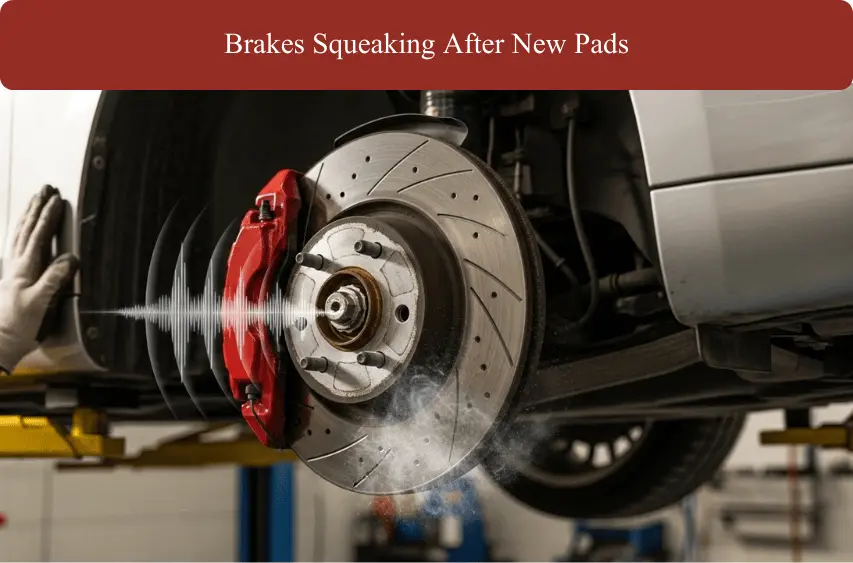
To fix the noise, you first have to understand what it is. A brake squeak is simply a high-frequency vibration. When you step on the brake pedal, the calipers squeeze the brake pads against the spinning rotor. This creates friction, which stops the car.
However, friction also creates vibration. Under normal circumstances, this vibration is at a frequency humans cannot hear. But when the vibration changes—due to surface texture, moisture, or loose parts—it shifts into an audible range. That is the squeak you hear. With new brakes, the system hasn’t settled yet, meaning those vibrations are more likely to happen until everything fits together perfectly.
The Primary Cause: The Bedding-In Process
The single most common reason for noise in the first few hundred miles is a lack of “bedding.” You might think new parts are perfectly smooth, but on a microscopic level, they are rough and uneven. They need time to get to know each other. This period is known as the bedding-in process, and it is crucial for long-term performance.
What is Brake Bedding?
Bedding is not just about wearing down the parts. It is actually a chemical process. For your brakes to work efficiently, the brake pads must leave a thin, uniform layer of their own friction material on the face of the iron rotor. This is called a “transfer layer.”
Until this layer is evenly applied, the pads are essentially grabbing and slipping against the bare metal of the rotor. This stick-slip action creates the vibration that reaches your ears as a squeal.
The Mating of Pad and Rotor Surfaces
Think of your new brake pads like a new pair of stiff leather boots. You cannot walk comfortably in them on day one; they need to mold to the shape of your feet. Brakes are the same.
The surface of a new rotor has microscopic grooves from the factory machining process. The new pads also have a specific texture. During the first few drives, these two surfaces physically grind against each other to smooth out those high spots. This “mating” process generates heat and friction variances that often result in temporary noise.
How Long Does the Break-In Period Last?
Patience is key here. Typically, the bedding-in process lasts for about 100 to 300 miles of normal city driving. During this time, you should avoid heavy panic stops if possible, as this can overheat the spots that haven’t smoothed out yet. If the noise persists well beyond the 300-mile mark, the issue likely isn’t the break-in period anymore—it’s something else.
Material-Related Causes: Composition and Design
Sometimes, the noise isn’t about how the brakes were installed, but what brakes were installed. Not all brake pads are created equal. The specific mixture of materials used to create friction plays a massive role in the acoustic profile of your vehicle.
High-Friction vs. Standard Brake Pads
If you drive a sports car or a heavy truck, you might have installed high-performance pads. These pads are designed to stop a vehicle aggressively and handle high heat. To do this, they often use harder materials with a higher friction coefficient. The trade-off for this extra stopping power is often increased noise. A slight squeak is often considered an acceptable characteristic of high-performance braking systems.
Ceramic Pads vs. Semi-Metallic Pads
The two most common types of pads on the market are ceramic and semi-metallic, and they sound very different.
- Semi-Metallic Pads: These contain bits of steel, iron, and copper wire. They are excellent at dissipating heat, but that metal-on-metal interaction makes them naturally louder.
- Ceramic Pads: These are made from dense ceramic compounds mixed with copper fibers. They are generally much quieter and produce less dust. If you switched from ceramic to semi-metallic pads, you might notice a noise increase that is entirely normal for that material.
The Role of Chamfers and Slots
Take a close look at a high-quality brake pad, and you will see the edges are angled (chamfered) or there is a slot cut down the middle. These aren’t just for looks.
Engineers cut these slots to change the physics of the pad. The chamfers ensure the pad touches the rotor gradually rather than slapping it flatly, while the slots separate the friction surface into smaller blocks so they don’t vibrate as one large mass. If you bought economy pads that lack these features, they are far more likely to sing.
Installation and Hardware Errors: When Something is Wrong
If you have driven past the break-in period and the noise remains, the focus shifts to installation. Even the most expensive pads will scream if the hardware isn’t set up correctly.
Lack of Lubrication on Contact Points
Brakes move. The calipers slide back and forth on steel pins every time you stop. These pins and the contact points on the back of the pads require high-temperature brake grease. If a mechanic skips this step, you get metal grinding on dry metal. This vibration travels through the caliper and manifests as a squeak, even if the pads themselves are fine.
Missing or Misaligned Shims and Clips
Between the brake pad and the caliper piston sits a thin piece of metal or rubber called a shim. Its only job is to absorb vibration. Often, lazy installers reuse old, rusted shims or leave them out entirely. Without this insulation, there is nothing to dampen the natural frequency of the braking force.
Wheel Torque Imbalance and Rotor Runout
Believe it or not, how you tighten your lug nuts matters. If a wheel is tightened unevenly, it can slightly warp the rotor, creating “runout.” As the wheel spins, the warped part of the rotor slaps the brake pad once per revolution, creating a rhythmic chirping noise.
Rotor Surface and Quality Issues
The rotor is just as important as the pad.
Surface Finish Irregularities
Economy rotors often have a rougher surface finish straight from the factory. This texture acts like a record player needle against the pad. High-quality rotors are machined to a smoother finish, allowing for a quieter mating process.
Brake Glazing from Improper Braking
This is often driver error. If you “ride the brakes” or brake too gently during the first few days, the heat can’t escape. This cooks the resin in the brake pad and turns the surface of the rotor into a glass-like glaze. The pads then skid over this smooth surface instead of gripping it, causing a high-pitched squeal.
Environmental Factors: The “Morning Squeak”
Sometimes, the car is fine, but the weather is not.
Moisture and Flash Rust Accumulation
If your brakes only squeak in the morning or after rain, don’t worry. Iron rotors oxidize (rust) very quickly—often overnight. The first two or three times you stop, the pads are scraping off this thin layer of “flash rust.” Once the rust is gone, the noise stops.
Temperature Fluctuations
Cold weather contracts metal. In freezing temperatures, brake components become more rigid and less capable of absorbing vibration until they warm up.
When to Worry: Distinguishing Normal Squeaks from Failures
Not all noise is innocent. A light squeak is annoying; a deep grind is dangerous.
Symptoms of Mechanical Failure
If the noise sounds like metal tearing, or if you feel a vibration in the steering wheel, you likely have a mechanical failure. A soft or “spongy” pedal is another red flag that requires immediate attention.
The Cost of Ignoring Brake Issues
Neglecting these signs can lead to total brake failure. Beyond the immediate danger to life, the financial repercussions are severe. Liability, medical bills, and vehicle repairs add up quickly. It is well documented that car crashes in the United States result in high-costs in what areas do these high-costs occur, making routine brake maintenance a critical investment in your financial safety.
How to Reduce or Eliminate Brake Squeal
If your brakes are squeaking, try these steps before replacing them again:
- Perform the Bed-In Procedure: Find a safe, empty road. Accelerate to 45 mph, then brake firmly (but not to a complete stop) down to 10 mph. Repeat this 8-10 times to heat up the brakes and transfer that friction layer evenly.
- Clean Brake Dust: High-pressure water or specialized brake cleaner can blast away dust and small stones trapped in the caliper.
- Upgrade Parts: If you bought the cheapest pads available, upgrading to a premium ceramic set from a recognized American brand can solve persistent noise issues.
Conclusion
A squeak after new brakes is usually just your car settling in. It’s a temporary annoyance caused by friction materials getting to know each other. However, if that squeak turns into a grind or lasts more than a week, it’s time to call a professional. Your brakes are the most important safety device you own—listen to what they are telling you.