Shopping Cart Dents to T-Bone Impacts: The Complete Visual Guide to Car Door Damage (and When to Walk Away)
A runaway shopping trolley in a Tesco car park. A reversing van on a narrow terraced street. A red light that someone else ran. Car doors take an enormous amount of punishment in everyday British life, yet most drivers have no real idea what the damage actually means — structurally, financially, or practically. That gap between what you can see and what a repair actually involves is where costly mistakes get made.
Surface Wounds: The Damage That Looks Worse Than It Is
Panel scratches, paint chips, and minor scuffs sit at the very bottom of the severity ladder. A key scratch that hasn’t broken through to bare metal, or a superficial rub from a car park pillar, typically needs nothing more than paint correction compound, a touch-up pen, or a single-panel respray.
Expect to pay anywhere from £80 to £350 for professional rectification at this level, depending on the depth of the scratch and whether colour-matching is straightforward. Modern metallic and pearlescent finishes — the kind you find on most premium German and Japanese cars sold in the UK — add complexity and cost because the painter must blend adjacent panels to avoid a visible tide mark.
The honest truth? Many drivers spend more worrying about these marks than they are worth. On a car with 80,000 miles that you plan to part-exchange within two years, a minor scuff is rarely worth a body shop visit.
The Dent Spectrum: From Shopping Trolleys to Parking Bollards
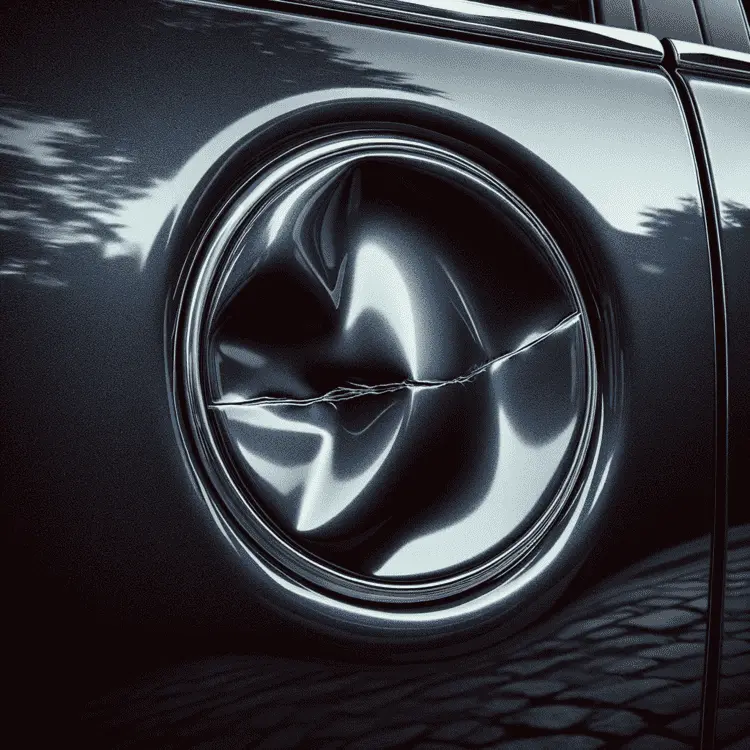
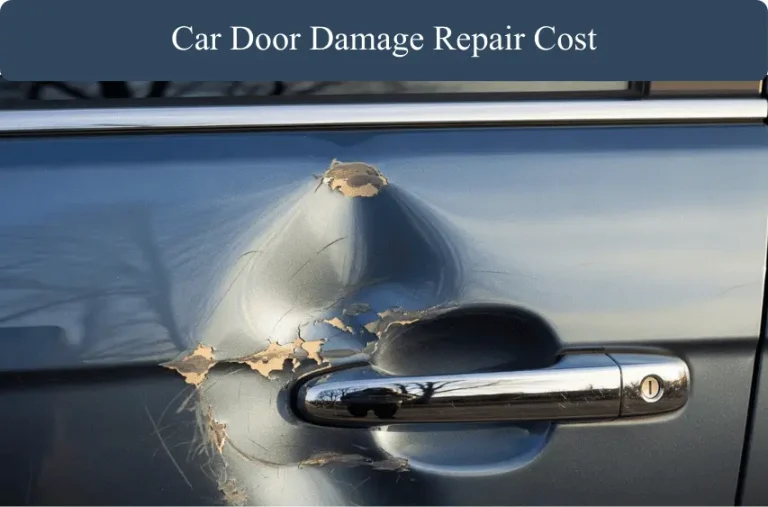
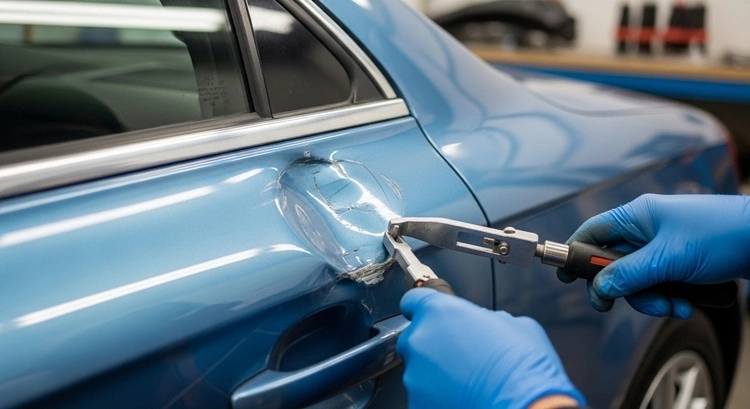
Dents are where the real diagnostic skill begins, because not all dents are equal. The key variables are depth, location, and whether the paint has cracked or creased. A shallow door ding — the classic calling card of a carelessly opened neighbouring car — is a strong candidate for paintless dent repair (PDR), a technique where a specialist uses metal rods and light boards to massage the metal back from behind without touching the paint surface.
PDR is genuinely impressive when the conditions are right. Costs typically fall between £60 and £200 per dent, completion takes a matter of hours, and the result is often indistinguishable from factory finish. The catch is that PDR only works where the paint film is fully intact and the metal hasn’t been stretched beyond its elastic limit.
Once a dent creases the metal — think of the sharp ridge left by a bollard corner — the panel needs traditional bodywork: filler, primer, paint, and blending. That shifts the bill to between £250 and £600 for a single door panel at a reputable independent bodyshop, rising considerably at main dealer rates.
- Shallow ding, paint intact: PDR candidate — £60 to £200, same-day turnaround
- Creased dent, paint cracked: Traditional bodywork required — £250 to £600
- Multiple dents across one panel: Full respray often more economical — £400 to £800
- Dent near the door edge or crease line: Highest difficulty for PDR, premium pricing applies
When It Gets Structural: Understanding What Lives Inside Your Door
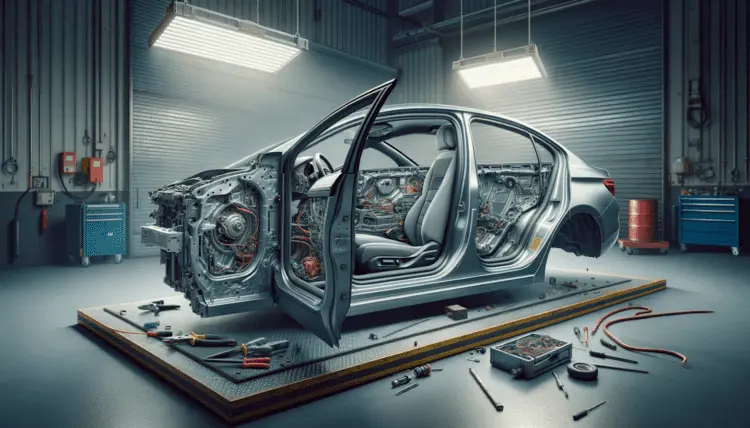
Open any modern car door and you’ll find considerably more than a metal skin. Behind the outer panel sit an intrusion beam, a window regulator mechanism, wiring looms for electric windows and mirrors, potentially a speaker housing, a side-impact airbag curtain, and the door latch assembly. An impact severe enough to push the outer skin inward by more than a centimetre or two starts to threaten all of it.
Structural door damage — the kind where the frame has bent, the door no longer closes flush, or daylight is visible around the seal — requires full panel replacement, not repair. A replacement door skin or complete door shell from a breaker’s yard might cost £150 to £400 for a common model; fitting, painting, and reattaching all internal components typically adds another £500 to £900 in labour.
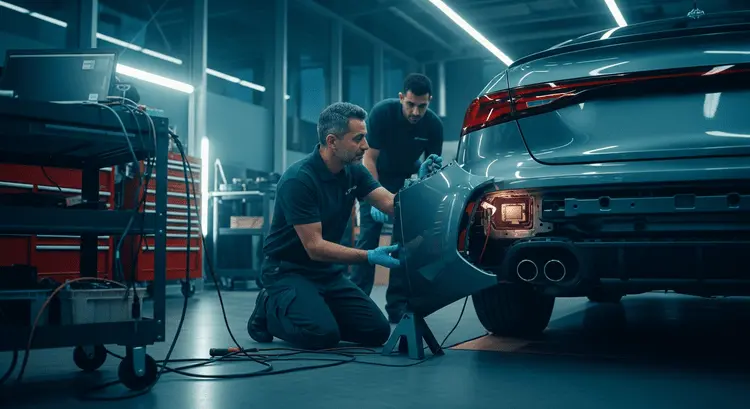
If the door aperture itself — the structural box section in the car’s body that the door hangs in — has been deformed, you’re now in territory that requires a chassis jig and specialist alignment work. That’s where bills start climbing past £1,500 on a mid-range car.
T-Bone Reality: Side Impacts, Airbags, and the Write-Off Calculation
A T-bone collision — where a vehicle strikes the side of another at or near a right angle — is among the most mechanically destructive scenarios a door can face. Even at relatively modest speeds, the forces involved can fold the outer skin against the intrusion beam, collapse the B-pillar, deploy side curtain airbags, and corrupt the door aperture geometry across multiple panels.
Deployed airbags alone add meaningful cost because the entire airbag module, its sensor network, and often the seat side bolster must be replaced. Budget a minimum of £800 to £2,000 simply for airbag reinstatement on a typical family hatchback. Pile structural repair costs on top, and the bill for a significant T-bone on a five-year-old Ford Focus or Vauxhall Astra can exceed £4,000 to £6,000.
Insurance companies apply the write-off threshold at the point where repair costs approach or exceed the vehicle’s pre-accident market value. A car written off as a Category S (structurally damaged, repairable) can be legally returned to the road after professional repair, but its value is permanently impaired — typically by 20 to 40 per cent — even after immaculate rectification work.
The Fix-or-Replace Framework: How to Actually Decide
The emotional pull to repair a car you know and trust is entirely understandable — particularly if you’ve spent time and money making it your own, from a bespoke set of alloys to a personalised plate sourced through a specialist like Number 1 Plates.That investment in personalisation is real, and it makes the repair-versus-replace calculation more than purely financial.
But sentiment has limits. A sensible framework works like this: if the repair cost exceeds 50 per cent of the car’s current market value, you need a compelling reason beyond sentiment to proceed. If structural integrity is genuinely compromised and the repairer cannot provide documented, verified alignment data post-repair, walk away regardless of the quote.
Get at least two written quotes from VAT-registered bodyshops with verifiable reviews — not just estimates over the phone.
Request a strip-and-inspect assessment on anything beyond a minor dent; hidden damage only reveals itself once the panel comes off.
Check current market value using Autotrader and CAP HPI before committing to any repair over £500.
Verify airbag and seatbelt pretensioner status after any significant side impact — these are safety-critical and non-negotiable.
Ask about HPI markers before buying a repaired car; a Category S or N marker will affect resale value and some finance agreements.
Car door damage ranges from the trivial to the terminal, and the gap between them is not always obvious from the pavement. A dent the size of your palm could be a forty-minute PDR job or the visible tip of a structural problem that costs more than the car is worth. The most valuable thing you can bring to any damage assessment is an understanding of what questions to ask — and a willingness to hear an answer you might not want.
Knowledge, in this case, is quite literally worth money.