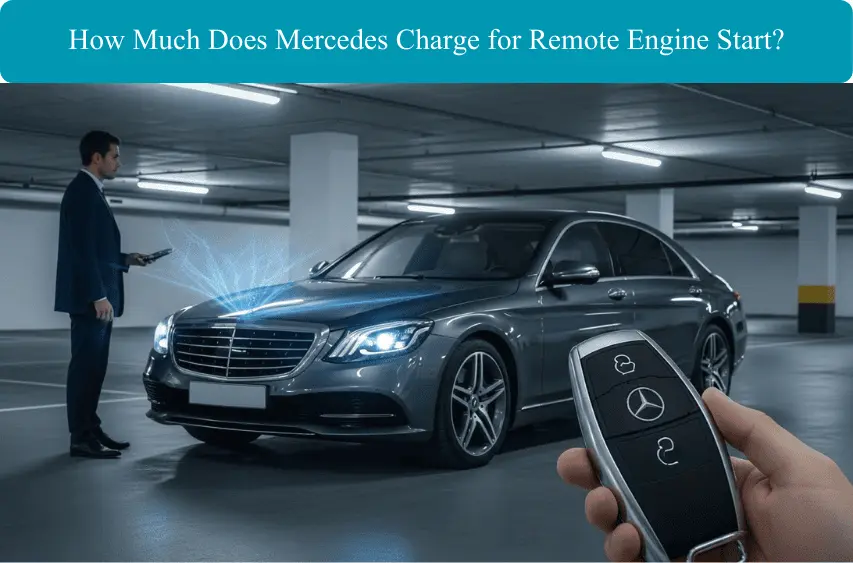
How Much Does Mercedes Charge for Remote Engine Start?
Imagine stepping out of your front door on a freezing January morning. Instead of shivering while you wait for the windshield to defrost, you slide into a cabin that is already warm, with the seat heater gently toasting your back. Or perhaps it’s the height of summer, and you’re greeted by a blast of cool air rather than a stifling heatwave.
This level of comfort is exactly what the Mercedes-Benz Remote Engine Start feature offers. But as any luxury car owner knows, premium features often come with a premium price tag. The cost isn’t a simple flat fee; it depends entirely on whether you are subscribing to a digital service for a newer model or installing physical hardware on an older one.
What Is Mercedes Remote Engine Start and How Does It Work?
At its core, Mercedes Remote Engine Start is more than just a key fob trick. It is a sophisticated integration of your vehicle’s mechanical systems with cloud-based technology.
The Mercedes me Connect Ecosystem
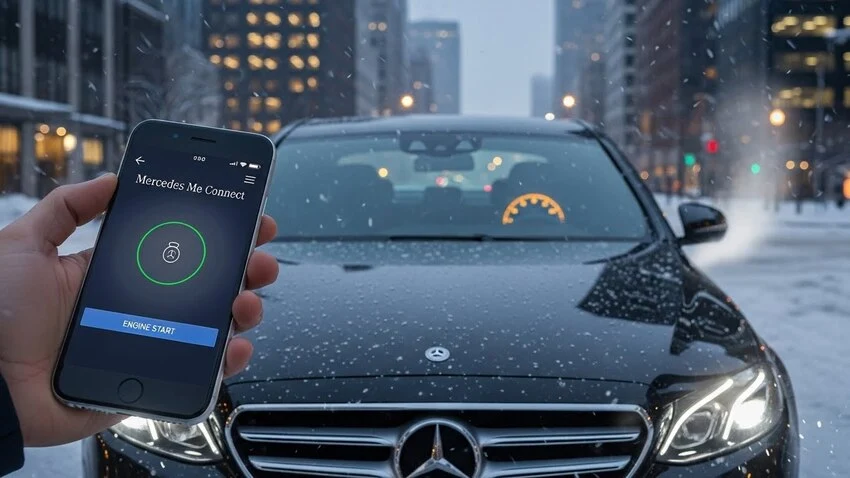
For most modern Mercedes-Benz vehicles, remote start is a software-defined feature powered by Mercedes me Connect. Your car is equipped with a HERMES communication module, which acts like a built-in smartphone. When you tap “Start” on your phone, the request travels to a secure Mercedes server, which then verifies the command and sends a signal via cellular network to your car to ignite the engine.
Because this system relies on data and server infrastructure, it is treated as a “Digital Extra.” This means that for many drivers, the feature is not a one-time purchase but an ongoing service that requires an active account.
Key Benefits: Comfort, Security, and Control
Beyond the obvious luxury of climate control, the system is designed with safety in mind. When you remotely start the engine:
- The doors remain locked, ensuring no one can enter the vehicle while it warms up.
- The engine runs for a maximum of 10 minutes before automatically shutting off to conserve fuel.
- The climate control activates to the last setting, or automatically adjusts to the target temperature.
However, before you make this feature a daily habit, it is smart to ensure your vehicle is in top condition. Running the engine while parked puts different demands on the car than driving. It’s always a good idea to stay on top of routine maintenance, such as following a Mercedes A3 service checklist, to ensure your battery and fluids are ready for the extra idle time.
Vehicle Compatibility: Does My Mercedes Have Remote Start?
Not every Mercedes-Benz is ready for remote start right out of the factory. The availability largely splits the lineup into two eras: the modern digital era and the legacy era.
Eligible Models (2019–Present)
If you drive a model from 2019 or later, chances are high that your vehicle is “Remote Start Ready.” This includes popular lines like the C-Class, E-Class, S-Class, GLE, and GLC, provided they are equipped with the MBUX (Mercedes-Benz User Experience) infotainment system. These vehicles have the necessary hardware pre-installed; you simply need to unlock the feature through the app.
Legacy Support for Older Models (2016–2020)
For vehicles produced between 2016 and 2018 (and some 2019 models without MBUX), the situation is different. While some may support the older “mbrace” platform, many require a physical retrofit. If you own an older chassis—such as a W204 C-Class or a W212 E-Class—you cannot simply download an app. You will need to look into aftermarket hardware solutions, which we will discuss in the cost breakdown.
Restoring or upgrading features on an older luxury car is a significant investment. If you are already pouring money into modernizing the tech, you might also be considering cosmetic updates. Owners often compare these tech upgrades with other restoration costs, such as how much does it cost to paint a car, to decide where their budget is best spent.
Different Ways to Access Remote Start
Once you know your vehicle is compatible, you have a few ways to actually trigger the ignition.
Activation via the Mercedes me App
This is the primary method for new vehicles. You open the Mercedes me App on your iOS or Android device, navigate to the remote start icon, and authenticate via FaceID or a PIN. It works from virtually anywhere, as long as both your phone and the car have a cellular signal.
Key Fob Activation (Newer vs. Older Models)
Many drivers prefer the tactile feel of a key fob. On some newer models, you can activate remote start by pressing the “Lock” button on your SmartKey three times consecutively. However, this functionality is not always enabled by default and may require a dealer activation or an aftermarket module to work reliably.
Voice Control and MBUX Integration
For the ultimate “smart home” experience, you can link your Mercedes me account to voice assistants. Simply saying, “Hey Google, start my car,” adds a layer of futuristic convenience that fits perfectly with the Mercedes brand ethos.
Comprehensive Cost Breakdown
Now, let’s talk numbers. The price you pay varies wildly depending on whether you are paying for a digital subscription or a physical installation.
Mercedes me Connect Subscription Pricing (2025 Rates)
If your car is 2019 or newer, you are likely looking at a subscription model.
- The Complimentary Trial: Most new Mercedes-Benz vehicles come with a one-year free trial of the “Remote Access” package.
- Annual Subscription: Once the trial expires, you must renew the service to keep the feature. As of 2025, the standalone Remote Access Package—which includes Remote Engine Start, Remote Door Locking, and Vehicle Status—typically costs between $35 and $50 per year.
While this fee is relatively low, it is a recurring cost that you need to budget for, much like your streaming services. But what about the hidden costs of maintenance? Frequent idling can shorten your oil life. It’s worth checking how much is an oil change at Valvoline versus the dealership to keep your annual running costs optimized while enjoying your remote start.
One-Time Activation and Dealer Service Fees
If your vehicle came from the factory with the necessary hardware but the feature was never activated, you might face a different set of costs. Occasionally, a dealership visit is required to “code” the feature into the vehicle’s active profile.
This service is not always free. Dealerships typically charge a diagnostic or labor fee to hook up the vehicle to the Star Diagnosis System (SDS). Expect to pay between $75 and $200 for this one-time activation. It is essential to clarify this upfront with your service advisor, as some certified pre-owned (CPO) purchases might include this activation as a courtesy.
Free Trials and Renewal Terms
Mercedes-Benz understands that habit drives subscriptions. That is why almost every new vehicle equipped with Mercedes me Connect includes a complimentary trial period, usually lasting 12 months from the date of activation.
Once this period ends, the feature will simply stop working. You won’t be automatically charged unless you have a card on file with auto-renewal enabled. To check your status, log in to the Mercedes me portal. If you plan to keep the car for several years, look for “Digital Extra” bundles. Mercedes often offers discounts if you purchase a 2-year or 3-year renewable term, effectively dropping the annual price.
Retrofitting and Hardware Costs for Unsupported Models
For owners of models like the W204 C-Class (2008–2014) or the pre-facelift W212 E-Class, digital subscriptions are not an option. Your vehicle lacks the embedded cellular architecture to “talk” to the Mercedes cloud. In this scenario, your only path to a warm cabin is aftermarket hardware.
Aftermarket Remote Starter Kits
You will need to purchase a specific remote starter module designed to interface with the Mercedes EIS (Electronic Ignition Switch). Leading brands in this space, such as Mid City Engineering or Viper, engineer kits that integrate seamlessly with your factory key fob.
- Hardware Cost: High-quality “Plug-and-Play” kits typically range from $300 to $600.
- Key Fob Integration: Most of these systems allow you to start the car by pressing the “Panic” button or the “Lock” button on your existing key three times. This saves you from carrying a bulky secondary remote.
Professional Installation and Labor Rates
This is not a project for the average DIY enthusiast. Mercedes-Benz security systems are incredibly complex and involve sensitive fiber optic loops and encrypted immobilizers.
- Labor Costs: Professional installation usually takes 2–4 hours. At standard shop rates, expect to pay an additional $150 to $400 for labor.
- Total Investment: All in, a proper retrofit will cost between $500 and $1,000. While steep, this is a one-time fee that adds permanent value and functionality to the vehicle.
Hidden Costs and Maintenance Considerations
Adding remote start to your daily routine changes how your car operates. It is easy to overlook the mechanical side effects of frequent idling.
Impact on Service Intervals and Consumables
When you remote start your car daily, you add engine runtime that the odometer does not record. Ten minutes of idling every morning adds up to over 60 hours of engine wear per year—roughly equivalent to driving 3,000 highway miles.
This means your oil degrades faster. Relying solely on the mileage counter for maintenance might leave your engine unprotected. You may need to shorten your service intervals to keep the engine healthy. Smart owners factor in these slightly more frequent fluid changes as part of the “convenience tax” of using remote start.
Battery Drain and Fuel Consumption
An idling engine consumes fuel—roughly a quarter to half a gallon per hour depending on engine size (V6/V8). Over a winter, this can add up to a noticeable amount at the pump. Furthermore, the remote start system relies on a healthy battery. If your battery is old or weak, the system may refuse to engage to prevent leaving you stranded with a dead car.
Is the Mercedes Remote Start Subscription Worth It?
Ultimately, the value of this feature is subjective. It depends on where you live and how much you value physical comfort.
Pros and Cons Analysis
- Pros:
- Immediate Comfort: No waiting for heat or A/C.
- Engine Health: Warms the oil and coolant before you drive hard.
- Security: Keeps the car locked and secure while running.
- Cons:
- Recurring Cost: It’s another subscription to manage.
- Connectivity Reliance: If your car is parked in a deep underground garage without cell signal, the app will not work.
Cost-Benefit Perspective: Climate and Daily Usage
If you live in a region with mild weather—say, Southern California or the Mediterranean—paying $50 a year might feel unnecessary. Rolling down the windows works just fine.
However, if you live in the Snow Belt or desert climates where interior temperatures can reach dangerous extremes, the cost is negligible. For less than the price of one tank of gas per year, you ensure that every drive begins in a safe, comfortable environment.
FAQs
On 2019+ models with Mercedes me Connect, the answer is generally no. The feature is server-based. Once the trial ends, you must pay. The only exception is if you install an aftermarket module that bypasses the factory cloud system.
Using the official Mercedes me subscription does not void your warranty. However, installing a third-party aftermarket starter can affect your warranty if the installation damages the vehicle’s wiring or electronics. Always choose a reputable installer.
Yes. Since the system uses cellular data, you can start your car from Paris while it sits in a driveway in New York, provided both your phone and the car have an active internet connection.
Yes. The system is designed with redundancies. The doors remain dead-bolted, the gear shifter remains locked in Park, and the engine will automatically shut off after 10 minutes. If anyone attempts to force entry, the engine cuts out immediately.
Conclusion
The cost of Mercedes Remote Engine Start is not a single number—it is a choice between convenience and investment. For modern owners, it is a modest $35–$50 annual subscription that unlocks premium comfort. For owners of classic or older models, it is a one-time hardware investment of $500–$1,000.
Regardless of the route you take, the ability to command your vehicle to prepare for your arrival is one of those small luxuries that, once experienced, is very hard to live without.