
Who Makes Douglas Tires? A Comprehensive Review of Walmart’s Exclusive Brand
Buying new tires often feels like a grudge purchase. You know you need them for safety, but handing over hundreds of dollars for rubber rings is never fun. If you have walked into a Walmart Auto Care Center recently, you probably noticed the Douglas Tire brand. The price tag is incredibly attractive—often half the cost of premium names—but the low price naturally makes you wonder: Are these tires safe? Who actually makes them?
The answer is reassuring. Douglas Tires are manufactured by the Goodyear Tire & Rubber Company.
They are a private-label brand sold exclusively through Walmart. This means when you buy a Douglas tire, you aren’t buying a mystery product from an unknown factory; you are buying a budget-friendly tire engineered by one of the “Big Three” tire manufacturers in the world.
The Manufacturer: Who Actually Owns Douglas Tires?
Goodyear does not just own the name; they oversee the production. However, you won’t see the Goodyear logo splashed across the sidewall in big letters. Instead, Douglas is produced primarily through Goodyear’s subsidiary, the Kelly Springfield Tire Company.
The Goodyear Connection
Goodyear is a massive entity in the automotive world. To reach every type of customer, they use a tiered strategy. They have their flagship “Goodyear” tires for premium performance, and they use brands like Douglas to serve the entry-level market.
The relationship is simple: Goodyear designs the tire and manages the manufacturing standards, while Walmart handles the exclusive distribution. This cuts out the middleman and marketing costs, allowing the price to stay significantly lower than a standard Goodyear Eagle or Wrangler tire.
Brand History
The Douglas brand isn’t new. Goodyear established it in 1992 specifically to compete in the budget market. For over 30 years, this partnership with Walmart has allowed American drivers to keep their vehicles on the road without breaking the bank. It was a strategic move to ensure that drivers with tighter budgets didn’t have to resort to buying used tires or unsafe retreads.
Manufacturing Locations: Where Are They Made?
There is a persistent myth that affordable tires are always made overseas. While global manufacturing is common, a massive portion of Douglas Tires are actually Made in the USA.
The primary manufacturing hub for Douglas is the Kelly-Springfield plant in Fayetteville, North Carolina. This facility operates under Goodyear’s stringent quality control systems. So, while you are paying a budget price, you are often supporting American manufacturing.
Decoding the Tire ID (DOT Code)
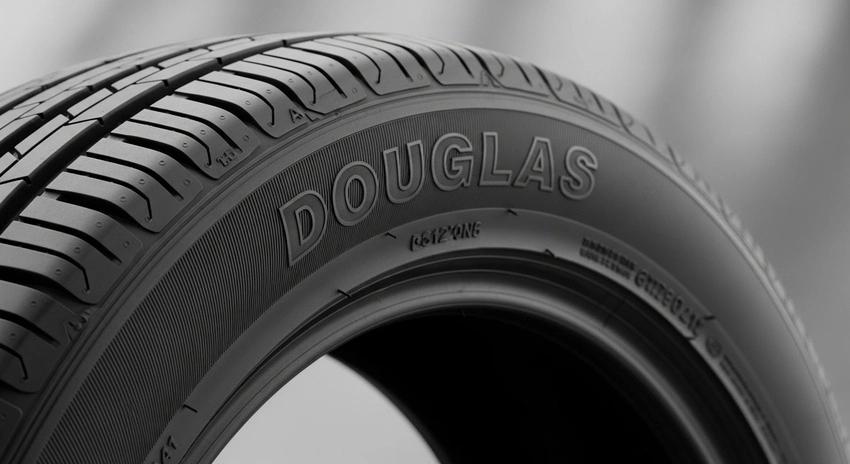
You don’t have to take anyone’s word for it—your tire tells you exactly where it was born. Every tire sold in the United States must have a Department of Transportation (DOT) code on the sidewall.
Here is how you can check:
- Find the DOT stamp: Look for the letters “DOT” on the rim of the tire.
- Read the first two codes: The first two characters following “DOT” are the Plant Code.
- Check the Database: You can look up this code in the NHTSA database. If you see a code that corresponds to the Fayetteville plant, you know your tire was made in North Carolina.
The Product Lineup: Types of Douglas Tires
Douglas does not try to be everything to everyone. You won’t find Douglas tires for Formula 1 cars or massive earthmovers. Instead, they focus entirely on the vehicles that most people drive every day: sedans, minivans, crossovers, and light trucks.
1. Douglas All-Season Tires
The Douglas All-Season is the brand’s bread and butter. It features a symmetrical tread pattern, which is designed to channel water away from the tire to prevent hydroplaning.
This tire is the go-to choice for older commuter cars. For example, if you are keeping an older vehicle running—perhaps you are the type of DIY owner who is currently researching where is the catalytic converter located on a chevy cavalier or fixing a busted taillight—the Douglas All-Season is likely the perfect match. It offers a smooth ride and reliable traction for drivers who just need to get from Point A to Point B safely.
2. Douglas Performance Tires
Don’t let the name “Performance” fool you into thinking these are race-track ready. In the context of Douglas, “Performance” means the tire is designed with a specific tread pattern that offers better cornering stability than the standard All-Season model.
These tires often feature circumferential grooves and unique shoulder blocks. These design elements help the tire grip the road better during highway driving and provide a slightly more responsive feel through the steering wheel. They are an excellent upgrade for drivers of sportier sedans who still want to keep costs low.
3. Douglas Touring Tires
If your priority is comfort, the Douglas Touring line is the answer. Touring tires are engineered to reduce road noise and absorb the bumps and vibrations from uneven pavement.
Douglas achieves this by using a slightly softer sidewall construction. This flexibility soaks up road imperfections, making long highway commutes much more bearable. While they might not last as long as a hard-compound tire, the trade-off for a quieter cabin is often worth it for families doing a lot of interstate driving.
4. Douglas Xtra-Trac Tires
For those who drive SUVs, pickups, or crossovers, the Xtra-Trac II is the heavy-hitter of the lineup. These tires are built with a reinforced structure to handle the heavier weight of larger vehicles.
They also feature a more aggressive tread depth. While they aren’t dedicated off-road tires, the Xtra-Trac design provides capable traction on gravel driveways, dirt roads, and in light snow conditions. They are a practical solution for work trucks that see a mix of city streets and job sites.
5. Douglas High-Mileage Tires
Value is the core of the Douglas brand, and the High-Mileage option doubles down on this. These tires use a specialized rubber compound designed to resist wear and tear over time. They are ideal for drivers who rack up serious miles annually and want to extend the time between tire replacements as much as possible.
Performance Analysis: Are Douglas Tires Any Good?
When you see a price tag of $50 to $120 per tire, you inevitably ask yourself: “What’s the catch?” The reality of tire engineering is that there is always a trade-off between cost and performance.
Budget vs. Premium Tires
If you compare a Douglas tire to a top-tier Michelin or Continental, you will notice differences. Premium brands use complex silica-infused rubber compounds that stay flexible in freezing temperatures and “bite” the asphalt harder during emergency braking. Engineering tests often show that premium tires can stop a car significantly shorter—sometimes by over 30 feet—than budget options.
However, Douglas tires are not “cheap” in the sense of being dangerous. They meet all US Department of Transportation safety standards. They are compliant, safe, and perfectly adequate for legal driving speeds. They just might not have that sharp, “reactive” feel you get from a luxury performance tire.
Consumer Perception and Reputation
Ask ten people about Douglas tires, and you will get mixed reactions, but the consensus leans heavily toward value.
- The Good: Most drivers are thrilled with the price-to-value ratio. Getting 40,000 to 50,000 miles out of a set of tires that cost less than $300 total is a massive win for the family budget.
- The Bad: The most common complaint is road noise. As the tread wears down, budget tires tend to get louder on the highway compared to premium touring tires.
It is also important to diagnose issues correctly. Some drivers install new budget tires and become hyper-aware of every sound their car makes. If you hear a grinding or whining noise when turning the steering wheel, don’t automatically blame the new rubber. While budget tires can hum, mechanical noises during turns usually point to suspension or power steering issues that need attention regardless of what tires you are running.
Longevity and Warranty
One of the biggest fears with budget tires is that they will wear out in a year. Douglas effectively counters this fear with a solid warranty backing.
Real-World Expectations
You can realistically expect Douglas tires to last between 3 to 4 years on a daily driver, or roughly 40,000 to 60,000 miles. This lifespan is surprisingly competitive. While they might deteriorate faster than a premium tire if left sitting in the sun (dry rot), active use keeps the compounds healthy.
The Warranty Coverage
Most Douglas passenger tires come with a 45,000-mile limited treadwear warranty. This is a strong vote of confidence from the manufacturer. If the tires wear down prematurely despite proper rotation and inflation, you get a prorated credit toward your next set.
Additionally, because they are sold at Walmart, you often have access to their Road Hazard Warranty. This is an optional add-on, but it covers flat repairs and replacements if you hit a nail or a pothole—a lifesaver for city drivers.
Buying Guide: Who Should Buy Douglas Tires?
Douglas tires are not for everyone, but they are the perfect solution for a specific type of driver.
The Ideal Douglas Driver
- Budget-Conscious Commuters: If you need a safe inspection-passing tire to get to work and back, this is it.
- Drivers in Mild Climates: The All-Season models handle rain well, but if you live in an area with heavy, deep snow, you should invest in dedicated winter tires instead.
- Older Vehicles: Does it make sense to put $1,000 tires on a car worth $2,500? Douglas offers a maintenance solution that matches the value of the vehicle.
Purchasing Options: New vs. Used
Because Douglas tires are so affordable new, the market for used ones is unique.
Why Choose New?
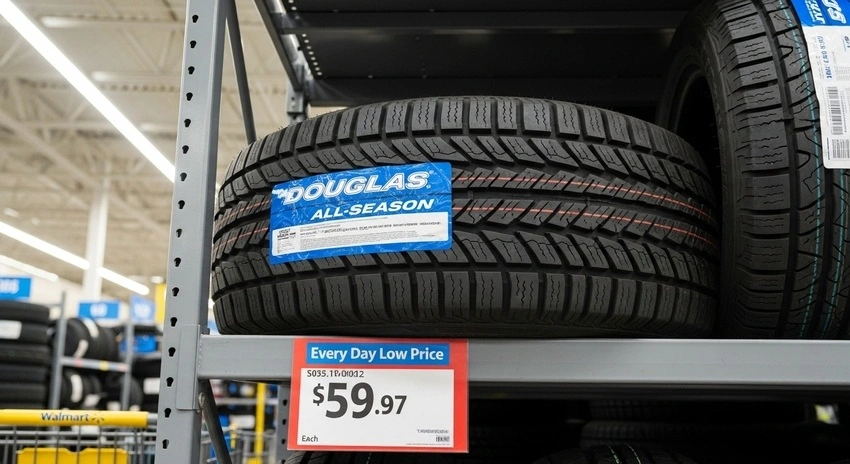
Buying new is almost always the smarter play here. For $60 a tire, you get the full tread depth, the fresh rubber compound, and that 45,000-mile warranty. You also get the peace of mind knowing the internal structure hasn’t been damaged by the previous owner hitting a curb.
The Risk of Used Tires
You might find used Douglas tires for $20 or $30, but it is rarely worth the risk. A used tire has no warranty history. You don’t know if it was driven while underinflated, which damages the sidewall integrity. Given the low entry price of a brand-new Douglas tire, saving $30 to risk a blowout isn’t a mathematically sound decision.
Essential Maintenance Tips
To get every mile out of your investment, you need to treat these tires right. Budget tires are often less forgiving of neglect than premium ones.
- Rotate Regularly: Rotate your tires every 5,000 to 7,000 miles. This ensures they wear evenly. If you skip this, the front tires (which handle the steering and weight of the engine) will bald much faster than the rears.
- Check Alignment: If your car drifts to one side, your alignment is off. This will chew through a Douglas tire’s shoulder tread in a matter of months.
- Monitor Pressure: Keep them inflated to the PSI listed on your driver’s door jamb, not the max PSI on the tire wall. Underinflation causes heat buildup, which is the number one killer of tires.
Conclusion
So, who makes Douglas Tires? Goodyear. And that single fact changes the entire value proposition.
You aren’t buying a generic, no-name product; you are buying a tire engineered by industry veterans, manufactured largely in American factories, and sold at a price point that keeps your budget intact.
They may not offer the whisper-quiet ride of a luxury touring tire or the track-day grip of a high-performance compound, but they don’t claim to. They claim to be an affordable, reliable, and safe option for the everyday driver. And on that promise, Douglas Tires delivers exceptionally well.