ABS Built Into My Car Is Intended to Do What?
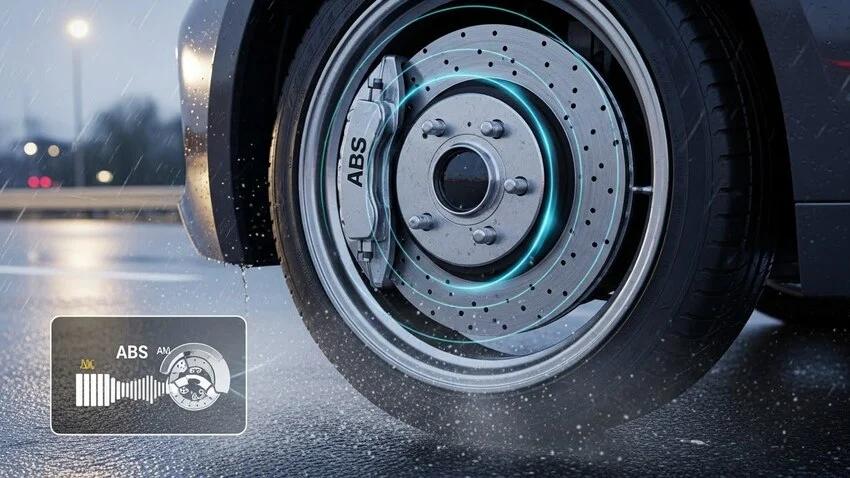
Imagine you are driving down a highway on a rainy afternoon. Suddenly, traffic ahead comes to a complete halt. You instinctively slam your foot on the brake pedal. In an older vehicle, this panic reaction would likely cause your tires to lock up, turning your car into an uncontrollable sled. However, in a modern vehicle, you feel a rapid pulsing under your foot, and remarkably, you can still steer around the stopped car ahead. This is the Anti-lock Braking System (ABS) at work.
The ABS built into your car is intended to prevent wheel lock-up during emergency braking. By keeping the wheels rotating just enough, the system ensures you maintain steering control, allowing you to maneuver away from danger rather than sliding straight into it. It is a critical safety feature that works faster than any human driver ever could.
What Is ABS and Why Cars Use It?
ABS stands for Anti-lock Braking System. To understand why it is so important, you have to look at how brakes used to work. In the past, if you applied maximum pressure to the brake pedal, the brakes would clamp down so hard that the wheels stopped spinning entirely. This is called “locking up.”
When a tire stops rolling and starts sliding, it loses traction. More importantly, a sliding tire cannot steer. No matter how much you turn the steering wheel, a car with locked wheels will continue moving in the direction of its momentum.
Car manufacturers introduced ABS to solve this physics problem. It was designed to replicate the advanced driving technique of “threshold braking”—applying just enough pressure to slow the car without locking the wheels—but with computerized precision. This technology is a massive leap forward from the days of classic muscle cars, like the iconic Smokey and the Bandit Firebird, which required skilled driver input to avoid spinning out during hard stops.
How Does an ABS System Work?
The system operates using a network of speed sensors attached to each wheel, a central control unit, and hydraulic valves. These sensors constantly monitor how fast each wheel is rotating.
This cycle of releasing and reapplying the brakes happens incredibly fast—often 15 to 20 times per second. It is essentially pumping the brakes for you, but at a speed no human foot could match.
What to Expect: Sensations and Noises
If you have never triggered your ABS before, the sensation can be startling. When the system engages, you will likely feel a strong vibration or pulsing in the brake pedal. You might also hear a mechanical grinding or buzzing noise.
Many drivers mistakenly think this noise means something is broken, similar to the worry caused by brakes squeaking after new pads. However, with ABS, that grinding sound is normal. It is simply the sound of the valves opening and closing rapidly. If you find yourself in an emergency stop, do not release the pedal when you feel this pulsing. Keep your foot planted firmly and let the system do its job.
What ABS Lets You Do That Normal Brakes Cannot
The biggest misconception about ABS is that it is designed to stop your car faster. While it can shorten stopping distances on some surfaces, its primary purpose is control, not speed.
Allows Steering During a Hard Stop
The most critical function of ABS is preserving your ability to steer. As long as your front wheels are rolling, they can generate cornering force. If you need to swerve to avoid a pedestrian or a deer while braking, ABS allows the car to respond to your steering inputs. Without it, your front tires would simply slide sideways, and you would crash into the obstacle regardless of how hard you turned the wheel.
Keeps the Car Steady on Wet or Icy Roads
On slippery surfaces like rain, ice, or snow, friction is inconsistent. One side of your car might be on dry pavement while the other is on a patch of ice. If you brake hard without ABS, the car will likely spin because the tires on the dry pavement will grip while the others slide. ABS balances the braking force at each wheel individually, keeping the vehicle stable and pointing straight ahead.
Reduces Crash Risk in Panic Stops
Panic stops are rarely planned. They happen when a child runs into the street or a truck suddenly swerves into your lane. In these high-stress moments, your instinct is to stomp on the pedal with all your might. ABS allows you to do exactly that without losing stability. It manages the brake pressure for you, turning a potential spin-out into a controlled deceleration.
Limits and Misconceptions About ABS
While this technology is a lifesaver, it does not rewrite the laws of physics. Understanding what the system cannot do is just as important as knowing what it can do.
ABS Does Not Always Shorten Stopping Distance
Many drivers assume that ABS will stop their car faster on every surface. This is not always true. On loose surfaces like deep gravel, sand, or fresh snow, a locked wheel can actually be more effective. A locked tire digs into the loose material, creating a wedge that helps stop the car. ABS prevents this digging action, which can sometimes increase stopping distances on these specific terrains. However, the trade-off is that you retain steering control, which is usually more valuable than a slightly shorter stop.
ABS Is Not a Substitute for Safe Driving Habits
Technology cannot overcome reckless driving. If you are speeding significantly on a wet road, ABS might keep you traveling straight, but you may still not have enough room to stop before hitting an obstacle. Never use safety features as an excuse to drive aggressively or follow other cars too closely.
Pumping the Brake With ABS Reduces Its Effectiveness
Drivers who learned to drive before the 1990s were often taught to “pump the brakes” to avoid skidding. With modern cars, this is the wrong approach. Pumping the pedal sends confusing signals to the ABS computer and disengages the system. To get the maximum benefit, you must press the brake pedal hard and hold it there, even if it shudders or makes noise.
Safety Impact and Real-World Benefits
The real-world data is clear: ABS saves lives. By preventing the loss of vehicle control, it drastically reduces the number of run-off-road crashes and multi-vehicle pile-ups.
Car and Pedestrian Safety
NHTSA studies have shown that ABS significantly reduces the frequency of collisions with pedestrians. Because the driver remains in control of the vehicle’s direction, they can often steer away from a person crossing the street at the last second. In non-ABS vehicles, a driver might see the pedestrian and brake, but the locked wheels would force the car to slide directly into the path of danger.
Fewer Fatalities From Loss-of-Control Crashes
Fatal accidents often occur when a car skids sideways into a barrier or oncoming traffic. By keeping the vehicle aligned and stable, ABS prevents these dangerous side-impact scenarios. It turns what could be a fatal loss of control into a manageable braking event.
ABS Warning Light: What Does It Mean?
If you see an amber light with the letters “ABS” pop up on your dashboard, your system has detected a fault. This usually means a wheel speed sensor is dirty, damaged, or a wire has come loose.
When this light is on, your car is safe to drive for normal commuting, but the anti-lock feature will not work. Your brakes will function like standard brakes. If you have to make a panic stop while the light is on, your wheels could lock up. You should have a mechanic inspect the system soon to restore full safety capability.
Maintenance and Troubleshooting
The Importance of ABS Sensor Calibration
Modern cars are complex. The ABS relies on precise data from sensors. If you get new tires, change wheel sizes, or have suspension work done, these sensors may need to be recalibrated. A misaligned sensor can send bad data to the computer, causing the ABS to activate when it shouldn’t—like while you are slowly pulling into a parking spot.
Brake Wear and Tear
While ABS protects your tires from flat spots (which happen when a locked tire drags across pavement), it puts the braking components to work. Regular maintenance is key. If you hear brakes squeaking after new pads, it is worth checking if the installation was done correctly, as uneven wear can sometimes affect sensor readings. Keeping your brake fluid clean and fresh is also vital, as the ABS module is sensitive to dirt and moisture in the hydraulic lines.
The Future of Anti-Lock Braking Systems
ABS is no longer just about brakes; it is the foundation for advanced safety tech. It works hand-in-hand with Electronic Stability Control (ESC) and Automatic Emergency Braking (AEB). In the future, AI and machine learning will allow these systems to predict slippery patches before you even hit them, adjusting braking pressure proactively rather than reactively.
Conclusion
The ABS built into your car is intended to keep you in the driver’s seat, figuratively and literally. It prevents your wheels from locking, ensures you can steer through a crisis, and keeps your vehicle stable when the roads are treacherous. While it doesn’t guarantee you can stop instantly on ice, it gives you the best possible chance to avoid an accident. Trust the pulse in the pedal, keep your foot down, and let the system do its job.
FAQs
Your regular brakes will still work, but you will not have anti-lock protection. You will need to be careful not to slam on the brakes on slippery surfaces to avoid skidding.
No. On dry and wet pavement, it generally helps you stop sooner. However, on loose gravel, sand, or deep snow, it may actually increase stopping distance slightly in exchange for better steering control.
Yes. Systems like Traction Control and Electronic Stability Control rely on the same wheel speed sensors as ABS. If your ABS fails, these other safety features will likely be disabled as well.