Understanding Who Pays for Repairs in a Chain Reaction Accident: Complete 2026 Overview of Multi-Vehicle Claims
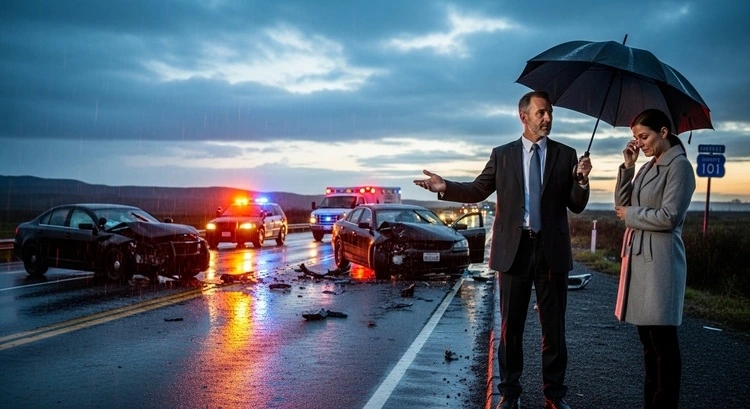
The sudden shock of a rear-end impact, followed by the secondary crunch of another vehicle hitting yours, is a terrifying experience. Surviving the initial strike brings fleeting relief, often shattered by the sound of screeching tires and breaking glass as more cars pile into the wreckage. Collisions between motor vehicles accounted for 43% of all motor-vehicle-related deaths in 2023, highlighting the severe physical toll of these chaotic events. Furthermore, the financial devastation is staggering; the economic costs of motor vehicle crashes in the United States have totaled $340 billion annually. While surviving the crash is the first and most critical hurdle, untangling the web of insurance adjusters, property damage, and liability in a multi-car scenario becomes a grueling secondary challenge. Drivers are suddenly thrust into a chaotic post-accident reality where securing repairs and covering medical bills feels impossible without a clear roadmap.
The Anatomy of a Pileup: How 2026 Traffic Conditions Cause Chaos
Environmental and Human Catalysts
These massive accidents rarely happen in isolation, requiring a specific combination of poor conditions and human error to trigger a chain reaction. Research indicates that slightly more than half of all fatal multi-vehicle pile-ups occur in adverse weather conditions such as snow, rain, or fog, which drastically reduce visibility and braking distances. The danger peaks when roads are most congested, with data indicating that 22.4% of these incidents happen during commuting hours between 4 p.m. and 8 p.m. High-speed corridors are particularly vulnerable to sudden stacking, as seen recently when multiple people were injured following an 11-vehicle collision on I-75 that caused widespread road closures and emergency responses. As a driver, understanding the primary drivers of these collisions can help you recognize the warning signs before you are caught in the wreckage.
- Distracted driving and sudden traffic stacking.
- Following too closely (tailgating) during stop-and-go commuting hours.
- Low visibility and slick pavement are preventing timely reaction.
- Aggressive lane changes that eliminate emergency escape routes.
Deciphering the Blame Game: Comparative Negligence Explained
The Role of Police Reports and Insurance Adjusters
The immediate aftermath of a pileup is disorienting, and establishing an objective narrative is essential for any future financial recovery. Police reports provide the crucial baseline narrative, detailing the positions of vehicles, skid marks, and initial witness statements recorded at the scene. However, insurance companies do not simply accept these reports at face value; they conduct aggressive investigations to mitigate their financial exposure. The stakes for determining accurate liability are high, especially considering that fatal crashes involving more than 10 vehicles are significantly more likely to result in multiple casualties than standard collisions. Adjusters will meticulously scrutinize every technical detail to shift the blame away from their policyholders and protect their financial interests.
How Modified Comparative Fault Dictates Payouts
When multiple drivers share the blame, insurance companies rely on specific legal frameworks to divide the heavy financial responsibility. The concept of comparative negligence becomes the guiding principle, dictating exactly how much compensation each involved party can legally recover after the investigation. For instance, laws in states like Pennsylvania and Texas mandate that a person can recover damages as long as they are not more than 50% responsible for the crash. While the fault is being sorted out, your deductible is directly impacted, often requiring you to pay upfront out of pocket just to initiate the work. Many drivers choose to start repairs through their own collision coverage immediately, hoping for successful subrogation later to refund their initial deductible payment.
| Fractured fault percentages are distributed among multiple drivers. | Average Repair Timeline | Fault Distribution | Investigation Depth |
|---|---|---|---|
| Standard Fender Bender | Typically resolved and repaired within 1 to 3 weeks. | Clear-cut liability usually assigned to a single at-fault driver. | Minimal review of photos and basic police reports. |
| Multi-Vehicle Collision Claims | Often takes several months due to competing insurance companies. | Fractured fault percentages distributed among multiple drivers. | Extensive accident reconstruction, witness interviews, and data analysis. |
Navigating Complex Insurance Negotiations and Protecting Your Interests
Overcoming Stalled Repairs and Rising Insurance Pushback
Securing a fair settlement for your damaged vehicle and physical injuries is becoming increasingly difficult as industry expenses rise. Recent market data indicate that property damage payouts surged, largely due to rising repair costs and parts inflation, placing pressure on auto insurers. Consequently, adjusters are fighting harder than ever to deny fault, delay approvals, or offer severely undervalued payouts. While filing a personal injury claim after a car accident is the standard process, doing so in a chain-reaction scenario requires specialized expertise to prevent your case from stalling indefinitely.
Multiple vehicles mean multiple competing insurance policies, rapidly depleted policy limits, and intense finger-pointing that can leave you without reliable transportation. To understand more about the repair mechanics themselves, you can review our internal guide on collision repair timelines to see how complex investigations affect your wait.
Overcoming these systemic hurdles requires a dedicated advocate who fundamentally understands the intricacies of multi-car liability and aggressive insurance tactics. The Law Office of Shane R. Kadlec serves as an authoritative ally in this space, providing the representation necessary to protect victims from recorded statements and premature lowball offers. Retaining a skilled multiple vehicle collision lawyer ensures that every liable party is identified, properly investigated, and held accountable. Their legal team possesses a deep understanding of Texas’s Chapter 33 modified comparative fault laws, allowing them to effectively counter adjusters who attempt to unfairly assign blame to innocent drivers. Furthermore, their ability to coordinate immediate medical care and relentlessly pursue maximum compensation ensures your property damage and medical needs aren’t lost in insurance disputes.
Securing Financial and Physical Recovery After a Pileup
A multi-car accident is a traumatic event that slows down your daily life and introduces overwhelming logistical challenges. The sheer number of involved parties complicates the recovery process, making it essential to fully understand the governing rules of comparative negligence. Securing seasoned legal counsel effectively strips the unchecked power away from giant insurance companies and puts it back exactly where it belongs: in the hands of the driver. You do not have to endure the stress of endless adjuster calls, stalled repair approvals, and mounting medical debt entirely on your own. By taking proactive steps and demanding fair treatment, you can fully rebuild your vehicle and your life following a devastating highway pileup.
FAQs
Secure your safety first, check for injuries, and dial 9-1-1. Document the scene extensively with photos of all vehicles, skid marks, and weather conditions, as this evidence is vital for proving the sequence of impacts.
If you file through your own collision coverage to expedite repairs, you will likely pay your deductible out of pocket initially. Once fault is officially determined by the adjusters or courts, your insurance company will seek subrogation to refund your deductible from the at-fault parties.
Multi-vehicle collisions involve several insurance companies, varying policy limits, and conflicting witness statements. Adjusters must painstakingly reconstruct the sequence of impacts to assign exact percentages of fault under comparative negligence laws before issuing payouts.