Where is the Catalytic Converter Located on a Chevy Cavalier?
If your Chevy Cavalier is running louder than usual or you are staring at a Check Engine Light on your dashboard, you might be hunting for the catalytic converter. You don’t need to be a certified mechanic to find it, but you do need to know where to look.
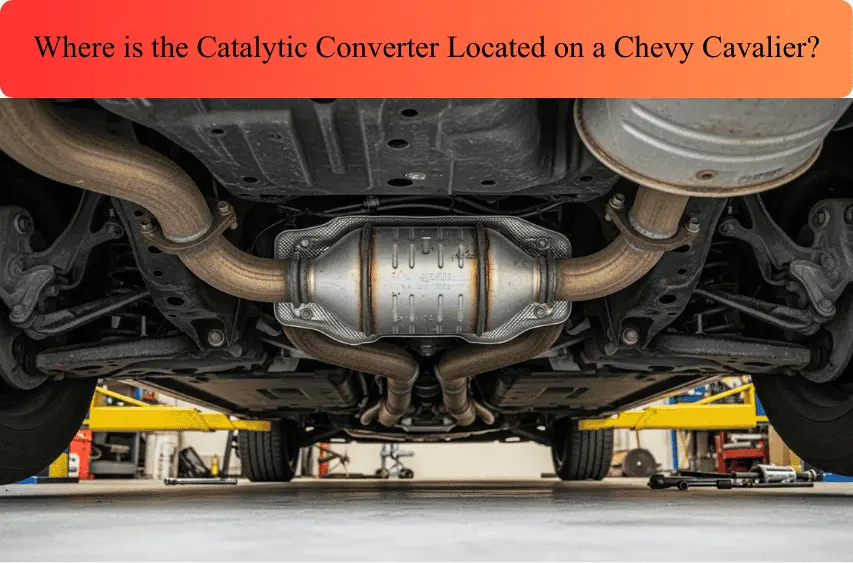
In short, the catalytic converter on a Chevy Cavalier is located underneath the vehicle, sandwiched between the exhaust manifold and the muffler. However, the exact spot shifts depending on the year your car was built. Older models tuck it closer to the engine, while later models push it further back under the passenger seating area.
Finding this component is the first step to solving performance issues, fixing emission failures, or simply understanding how your exhaust system works.
Understanding the Chevy Cavalier Exhaust System Layout
Before you slide under the car, it helps to visualize the path your exhaust takes. Think of the exhaust system as a single line that runs from the front of the engine to the rear bumper.
It starts at the engine block, where the exhaust manifold collects hot gases from the cylinders. From there, the gases travel down through a “downpipe” or “flex pipe.” This is where the magic happens. The gases enter the catalytic converter, which cleans them, before passing through to the muffler and finally exiting the tailpipe.
If you are scanning your vehicle for issues, you might see various codes pop up. While some codes are obscure—like a generic 7ea engine code which is often just a display identifier—codes related to the converter (like P0420) usually point directly to a specific inefficiency in this linear system. Knowing the layout helps you pinpoint exactly which part of that line is causing the trouble.
Precise Location by Model Year and Engine
The Chevy Cavalier had a long production run, and engineers moved the catalytic converter around as engine technology evolved. To find yours, you need to know which generation you are driving.
1995–1999 Models (2.2L OHV & 2.4L Engines)
If you drive an older Cavalier from the mid-to-late 90s, you are looking for a “close-coupled” design. In these cars, the catalytic converter is located very close to the engine, often right near the firewall (the metal wall separating the engine bay from the cabin).
Manufacturers placed it here intentionally. The converter needs high heat to work effectively, and placing it near the engine helps it warm up faster. To access it, you often have a better view from the front underside of the car, looking upward near the oil pan.
2000–2005 Models (2.2L Ecotec Engines)
When Chevy introduced the Ecotec engine, the layout changed. For these model years, the catalytic converter is located further downstream. You will find it roughly underneath the front passenger seat area.
If you crawl under the car from the side, look for the long exhaust pipe running down the center. The converter is the distinct, widened section located after the flexible mesh pipe but before you reach the large muffler at the back. This position allows for better airflow and cooling, which can help prolong the life of the component.
Visual Identification: What Does It Look Like?
You are under the car, but everything looks like rusty metal. How do you know which part is the converter? It has a few giveaways that distinguish it from a standard pipe or a muffler.
Distinguishing Characteristics
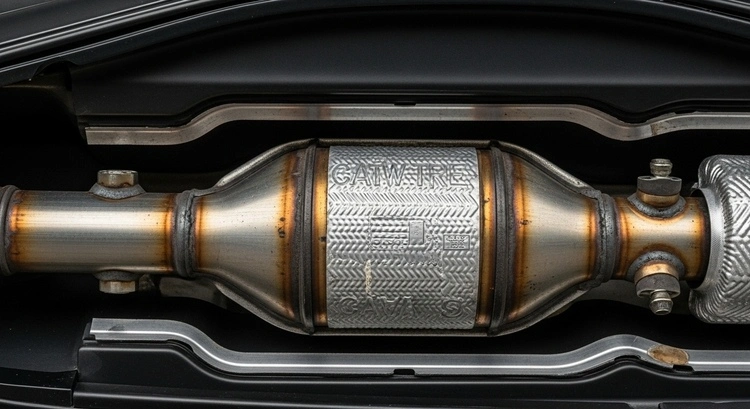
The catalytic converter looks like a flattened metal cylinder or an oval canister. Unlike the smooth, consistent width of the exhaust piping, the converter bulges out significantly.
- Shape: It is often oblong or pill-shaped.
- Material: While exhaust pipes might be shiny (if new) or uniformly rusty, the converter is often encased in a ribbed metal heat shield. This shield often looks like a separate metal skin wrapped around the canister.
- Condition: Because it gets hotter than any other part of the exhaust, it often has a more matte, heat-cycled discoloration compared to the rest of the piping.
It is important not to confuse the converter with other issues. For example, if you are under there because of a sound, ensure it is actually coming from the exhaust. A metallic rattle from the converter is distinct, whereas a grinding noise when turning steering wheel is a completely different issue related to your suspension or power steering pump.
Using Oxygen Sensors as Landmarks
If you are still unsure, look for the spark plugs of the exhaust system: the Oxygen Sensors (O2 sensors). These look like spark plugs screwed directly into the pipe with wires sticking out.
Your Cavalier has two of them. The “Upstream” sensor is before the converter (closer to the engine), and the “Downstream” sensor is located directly after or right in the middle of the converter. If you find a sensor, simply trace the pipe backwards or forwards. The large canister immediately next to that sensor is your catalytic converter. Unlike modern luxury cars where sensor issues can trigger complex warnings stating Mercedes active brake assist functions limited, the sensor system on a Cavalier is straightforward—they are simply there to monitor the health of the converter you are looking for.
The Role of the Catalytic Converter
You now know where it is and what it looks like, but what is it actually doing under there? The catalytic converter acts as a chemical laboratory for your Chevy Cavalier. Its job is to tackle the toxic byproducts of combustion before they escape into the atmosphere.
Function in Emissions Control
Inside that metal canister is a honeycomb structure coated with precious metals like platinum, palladium, and rhodium. When hot exhaust gases—specifically Carbon Monoxide (a poison), Hydrocarbons (unburnt fuel), and Nitrogen Oxides (smog creators)—pass through this honeycomb, a chemical reaction occurs.
The converter breaks apart these harmful molecules and reassembles them into safer substances: carbon dioxide and water vapor. It’s a silent process, but it’s the reason your Cavalier doesn’t smell like a lawnmower from the 1970s.
Impact on Engine Performance
Beyond cleaning the air, the converter plays a surprising role in how your engine runs. It creates a specific amount of backpressure that the engine is tuned to expect. If the converter gets clogged, that pressure builds up and chokes the engine. Conversely, if you remove it entirely, the change in pressure can sometimes mess with the oxygen sensor readings, confusing your car’s computer and altering the fuel mixture.
Signs of a Failing Catalytic Converter
Catalytic converters are designed to last the life of the vehicle, but they often fail due to age or engine issues. Since the Cavalier is an older vehicle now, failure is common. Here is how to tell if yours is on its way out.
Performance Symptoms
Your car will feel sluggish. If you press the gas pedal to pass someone on the highway and the engine roars but the car barely accelerates, you might have a clogged converter. It’s like trying to breathe through a straw while running; the exhaust simply can’t get out fast enough.
Auditory and Olfactory Signs
- The Rattle: This is the classic sound of a dead converter. If you hear a noise that sounds like rocks rattling inside a tin can when you idle, the internal ceramic honeycomb has likely shattered.
- The Smell: If you catch a whiff of rotten eggs or sulfur, that is a red flag. It means the converter is no longer processing sulfur from the fuel correctly.
Diagnostic Codes
The most reliable sign is usually the dashboard warning. A P0420 code (“Catalyst System Efficiency Below Threshold”) is the car’s way of telling you the converter isn’t doing its job.
Inspection, Removal, and Replacement Guide
If you have confirmed the converter is the culprit, you have two choices: take it to a shop or fix it yourself. On a Chevy Cavalier, this is often a manageable DIY project.
Safety First
Before you do anything, wait. The exhaust system gets hotter than any other part of the car, often exceeding 1,200°F. Let the car cool down completely—preferably overnight. Also, ensure you use sturdy jack stands. Never trust a simple hydraulic jack when you are working underneath a vehicle.
Tools You Will Need
You won’t need a garage full of equipment, but you will need the basics:
- Penetrating Oil: The bolts on exhaust systems are notorious for rusting. Soak them generously before you start.
- Wrench Set: Usually 13mm or 15mm sockets.
- O2 Sensor Socket: This special tool allows you to remove the sensor without stripping the wires.
- Reciprocating Saw: If your converter is welded on (common in aftermarket replacements), you may need to cut the old one out.
Step-by-Step Access
- Raise the Car: Lift the front end and secure it on stands.
- Soak the Bolts: Spray every bolt connecting the converter flanges to the pipes.
- Remove Sensors: Carefully unscrew the O2 sensors. Treat them gently; they are sensitive.
- Unbolt or Cut: If you are lucky, you can unbolt the flanges. If it’s one solid rusty piece, you will need to cut the pipe at the marked locations to fit the new unit.
- Install: Bolt or clamp the new converter in place, reinstall the sensors, and check for leaks.
Replacement Costs
If you do this yourself, a standard aftermarket converter for a Cavalier typically costs between $150 and $400. If you take it to a professional shop, expect to pay between $600 and $1,200. The price jumps significantly because shops often use OEM-grade parts and charge for the labor of cutting and welding.
Maintenance Tips to Extend Converter Life
The best repair is the one you never have to make. You can actually extend the life of your catalytic converter by keeping the rest of the engine healthy.
- Fix Upstream Issues: The number one killer of catalytic converters is raw fuel. If your spark plugs are old or a coil pack fails, unburnt gas dumps into the exhaust. When it hits the hot converter, it ignites and melts the honeycomb. Fixing a misfire immediately saves the converter.
- Watch for Oil Consumption: If your Cavalier burns oil, that oil ash coats the inside of the converter, slowly suffocating it.
- Avoid Physical Damage: Since the converter hangs low, be careful over speed bumps. A hard hit can crack the ceramic insides, rendering it useless.
Conclusion
Locating the catalytic converter on your Chevy Cavalier is straightforward once you know where to look. Whether it is tucked near the firewall on a 1996 model or sitting under the passenger seat on a 2004, it remains a vital component for your car’s health.
Don’t ignore the signs. A rattling noise or a sulfur smell is a warning that your exhaust is choked. By addressing these issues early—either by fixing the root engine problem or replacing the converter—you ensure your Cavalier runs efficiently and stays legal on the road.
FAQs
No. The converter cleans toxic gases, while the muffler reduces noise. They look somewhat similar but perform completely different jobs.
Technically, yes, the car will drive. However, it will be loud, pollute heavily, trigger a check engine light, and is illegal in most places.
If the noise comes from the exhaust pipe area, the ceramic core of your catalytic converter has likely broken apart and is tumbling around inside the metal housing.
Because they contain platinum and palladium, scrap converters have value. However, prices fluctuate wildly based on the market for precious metals, ranging anywhere from $50 to over $100 depending on the specific model and wear.