2026 Honda Accord Facelift: The Complete Guide to Redesign, Specs, and Release Date
The Honda Accord has been the gold standard for midsize sedans for decades. From the daily commute to cross-country road trips, it has built a reputation for reliability that few competitors can match. But in 2026, being “reliable” isn’t enough. Drivers today want sharper styling, premium technology, and a cabin that feels as modern as their smartphones.
Enter the 2026 Honda Accord facelift.
While the 11th-generation model is already a strong seller, this upcoming refresh aims to perfect the formula. Honda isn’t reinventing the wheel here; they are refining it. This update—often called a “mid-cycle refresh”—focuses on fixing the small complaints from previous years while injecting a sportier, more aggressive personality into the car.
Whether you are waiting for the bold new grille, the massive infotainment upgrade, or just want to know if the hybrid system is finally faster, this update promises to keep the Accord at the top of the food chain. In this breakdown, we’ll dive into every change, spec, and hidden detail you need to know before visiting the dealership.
Why the 2026 Facelift Matters
You might wonder why Honda is updating the car so soon. In the car industry, manufacturers usually refresh their models every three to four years. This “facelift” strategy keeps a vehicle competitive without the massive cost of building a whole new generation from scratch.
For the 2026 Accord, this update matters because it directly answers user feedback from the 2023–2025 model years. While the current car drives beautifully, some drivers felt the exterior styling was too safe or “bland.” Others noted that the interior technology, while functional, was starting to lag behind the massive screens found in competitors. Honda listened. This facelift aims to inject a sportier personality into the car and bring the cabin technology up to 2026 standards. It bridges the gap between a reliable family hauler and a desirable, tech-forward sedan.
A Closer Look at the Exterior Design Changes
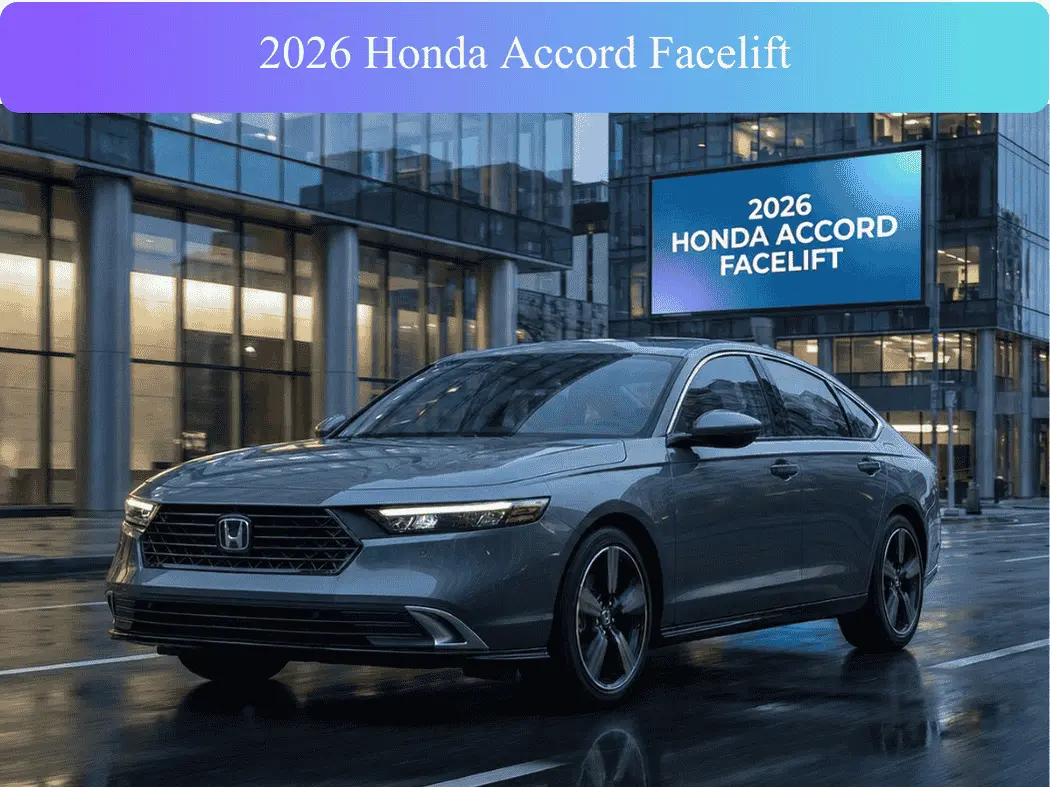
The most obvious changes happen on the outside. Honda has adopted a “Bolder Styling” philosophy for this facelift. The goal is simple: make the car look more expensive and aggressive than it actually is. The smooth, understated lines of the previous version are getting sharpened to create a stronger road presence.
The New Front Fascia and Grille
The face of the Accord gets the biggest surgery. The new front fascia features a hexagonal grille structure that demands attention. In the versions we have seen, this grille is composed of 19 horizontal silver slats. This design choice gives the front end a wider, more planted look. It moves away from the mesh patterns of the past and adopts a more sophisticated, architectural style. The front bumper also features sharper contours and angular air intakes, which help the car cut through the air more efficiently.
Lighting Updates: Headlights and DRLs
Lighting makes or breaks a modern car design. For 2026, Honda has installed slimmer LED headlights that look much angrier and focused. These aren’t just for show; they provide better nighttime visibility. The Daytime Running Lights (DRLs) now extend further, visually connecting with the central grille to emphasize the car’s width. In some markets, Honda has also removed the amber side reflectors for a cleaner, monochromatic aesthetic that looks incredibly sleek.
Rear Profile and Aerodynamics
The changes continue at the back. The rear profile now features updated taillight signatures that look crisp and modern. Honda has darkened some of the rear elements to contrast with the body color, adding a touch of sportiness. You will also notice a more pronounced rear diffuser on the lower valance. This isn’t just cosmetic; it helps manage airflow under the car, which slightly improves stability at highway speeds.
New Color Options and Paint Customization
Honda typically refreshes its color palette during a facelift, and 2026 is no exception. We expect to see deep, premium shades like a rumored “Venetian Blue” join the lineup. These factory paints use advanced robotic application to ensuring durability.
However, factory colors might not be enough for everyone. Some enthusiasts want their Accord to truly stand out with a unique look. If the standard options don’t excite you, you might think about a custom respray. Before you commit to that route, it is smart to research how much does it cost to paint a car so you can budget for a high-quality finish that matches the factory standard.
Interior Upgrades: Tech, Comfort, and Touchpoints
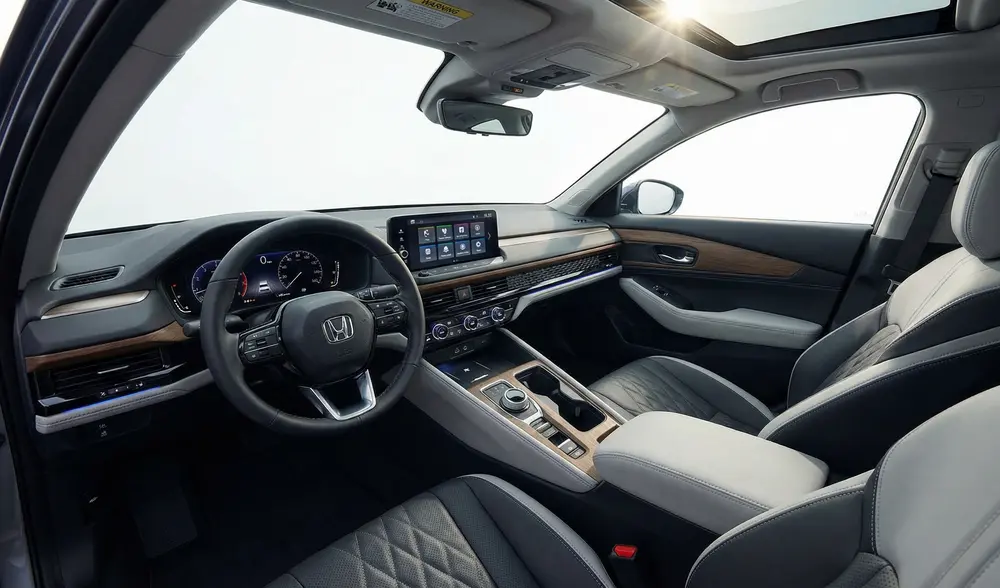
The interior of the 2026 Accord follows Honda’s longstanding “Man-Maximum, Machine-Minimum” philosophy. This means the cabin prioritizes your space and comfort over cluttered machinery. While the previous model was practical, this facelift aims to make the environment feel significantly more premium and high-tech.
The Massive 15-Inch Infotainment Screen
The centerpiece of the new interior is undoubtedly the screen. Honda is moving away from the standard 12.3-inch display found in current upper trims. In its place, the 2026 model introduces a massive 15-inch capacitive touchscreen. This isn’t just about size; it’s about usability.
The larger surface area allows for split-screen functions that actually work well. You can see your navigation map and your music playlist side-by-side without squinting. The system supports wireless Apple CarPlay and Android Auto as standard, meaning your phone connects the moment you sit down. Honda also upgraded the processor behind the screen, so swipes and touches register instantly with zero lag.
Digital Instrumentation and Connectivity
Behind the steering wheel sits a 10.2-inch fully digital instrument cluster. This screen is highly customizable. You can choose to display a traditional speedometer, a hybrid energy flow chart, or turn-by-turn navigation arrows right in your line of sight.
Connectivity goes beyond just phone pairing. The cabin now features USB-C 3.0 ports that offer high-wattage charging. This ensures your laptop or tablet charges quickly during a commute. Additionally, the integrated 5G Wi-Fi hotspot keeps your passengers connected, making long road trips much easier for families.
Cabin Quality and Noise Reduction
Honda also addressed the “road noise” complaints that have plagued the Accord for generations. The 2026 facelift uses softer materials across the dashboard and door panels, replacing hard plastics that tend to rattle.
More importantly, engineers added active noise cancellation and thicker acoustic glass in key areas. This creates a library-quiet atmosphere, even at highway speeds. The result is a ride that feels less like a standard family sedan and more like an entry-level luxury car.
Powertrain and Performance: Staying Strong, Getting Smarter
Under the hood, Honda sticks to what works but refines it for better efficiency and smoothness. The powertrain strategy remains a dual-track approach, offering a turbocharged gas engine for value-focused buyers and a sophisticated hybrid system for those wanting performance and economy.
The 1.5L Turbocharged Engine (ICE)
The entry-level trims, likely the LX and SE, will continue to use the proven 1.5-liter turbocharged inline-4 engine. This unit produces 192 horsepower and 192 lb-ft of torque. While these numbers might seem unchanged, the driving experience is different.
Honda has updated the software for the Continuously Variable Transmission (CVT). The new “Step-Shift” programming mimics the gear changes of a traditional automatic transmission. This reduces the “droning” sound often associated with CVTs and makes the car feel more responsive when you press the gas pedal to merge onto a freeway.
The 4th-Generation Hybrid System
The real star of the lineup is the hybrid powertrain, which serves as the standard engine for the Sport, EX-L, and Touring trims. This 4th-generation two-motor hybrid system pairs a 2.0-liter Atkinson-cycle 4-cylinder engine with two electric motors mounted side-by-side.
The total system output sits at 204 horsepower, but the torque is what you will feel. The traction motor delivers 247 lb-ft of torque instantly. This makes the Accord Hybrid feel quick off the line. Because the system can switch seamlessly between electric drive and engine drive, fuel efficiency is stellar. You can expect EPA estimates to hover around the 46–51 MPG range combined, depending on which wheels you choose.
The PHEV Factor (China vs. Global)
It is important to clarify a key difference between markets. The Chinese version of the 2026 Accord (built by GAC-Honda) features a Plug-in Hybrid (PHEV) option with a large battery capable of 60–80 km of pure electric range.
However, for the North American and global markets, Honda will likely stick to the standard self-charging hybrid (HEV). The reason is trunk space. The large battery required for a PHEV often eats into cargo capacity. By keeping the standard hybrid setup, the U.S. Accord retains its massive 16.7 cubic feet of trunk space, a major selling point for American buyers.
Advanced Safety: Introducing Honda Sensing 360+
Safety has always been a core pillar for Honda, but the 2026 facelift takes it a step further with the introduction of Honda Sensing 360+. While the current Accord is already an IIHS Top Safety Pick+, this new system aims to eliminate blind spots entirely.
The “360+” designation refers to the addition of corner radars and high-definition cameras that create a complete bubble of awareness around the car. The most practical addition for daily driving is the Traffic Jam Assist (TJA). This feature allows the car to handle steering, braking, and acceleration at low speeds (under 45 mph) during congested traffic. It significantly reduces driver fatigue during rush hour.
Other enhancements include a more refined Adaptive Cruise Control (ACC) that reacts more smoothly when cars cut in front of you, and an updated Lane Keeping Assist System (LKAS) that centers the car more naturally on curved highways. Blind Spot Monitoring is now expected to be standard across more trims, rather than reserved only for the top tiers.
2026 Accord Trim Levels and Pricing Estimates
Understanding the trim hierarchy is key to finding the right value. The 2026 lineup will likely continue the strategy of separating the gas-only models from the hybrids.
- LX and SE: These entry-level models will feature the 1.5L Turbo engine. They are perfect for buyers on a budget who still want the new look and standard safety tech. Expect pricing to start around $30,000.
- Sport Hybrid: This is typically the volume seller. It combines the efficient hybrid powertrain with sportier 19-inch black alloy wheels and unique styling cues.
- EX-L Hybrid: For those prioritizing comfort, the EX-L swaps the stiff sport suspension for a softer ride, leather seating, and parking sensors.
- Touring Hybrid: The flagship model. This trim will command a price north of $40,000 but includes every luxury feature available, such as the Heads-Up Display (HUD), Bose Premium Audio, and Google Built-In integration.
Pricing is expected to see a modest increase—likely between $500 and $1,500—to account for the larger screens and improved hybrid components.
Release Date and Global Availability
The rollout of the 2026 Honda Accord Facelift will happen in stages. The model has already made its debut in China, with sales expected to begin there by late 2025. This “China-first” strategy is common for Honda due to the sheer size of that market.
For U.S. and global buyers, history suggests a six-month lag. This places the North American release date in early 2026, likely hitting dealership lots between January and March. This timing allows Honda to clear out the remaining 2025 inventory before the refreshed models arrive.
Competitive Landscape
The midsize sedan segment is smaller than it used to be, but the competition is fiercer. The 2026 Accord faces two main rivals:
- Toyota Camry: The Camry recently went hybrid-only and offers All-Wheel Drive (AWD) on all trims. The lack of an AWD option on the Accord remains its biggest disadvantage for buyers in snowy climates.
- Hyundai Sonata: The Sonata offers a radical, futuristic design and excellent warranty coverage. However, the Accord generally beats it in terms of resale value and driving refinement.
The Accord’s sweet spot remains its balance. It offers a sportier drive than the Camry and a more premium feel than the Sonata, making it the best all-arounder in the class.
Final Verdict
The decision to buy now or wait depends on your priorities.
- Buy the 2025 Model If: You are value-conscious. Dealers will likely offer aggressive incentives and lease deals on the outgoing 2025 models to make room for the facelift. If you don’t care about having the largest screen or the newest grille, the current Accord is still a fantastic car.
- Wait for the 2026 Facelift If: You want the latest tech and a sharper look. The 15-inch infotainment screen, quieter cabin, and updated exterior styling make the 2026 model feel like a significant upgrade. If you plan to keep the car for 5+ years, the newer features will keep it feeling modern for longer.
FAQs
No. All indications suggest the 2026 Accord will remain Front-Wheel Drive (FWD) only. Honda reserves AWD for its CR-V and Pilot SUVs.
It is unlikely. The PHEV version is primarily for the Chinese market to meet local regulations. The US will continue with the standard self-charging hybrid.
We estimate a starting price of roughly $30,000 for the base LX, rising to over $40,000 for the fully loaded Touring Hybrid.