How To Open Gas Tank On Chevy Malibu (Comprehensive Guide 2000–2024)
You have just pulled into the gas station, turned off the ignition, and stepped out into the cold wind, only to realize the fuel door is locked tight. It is a frustrating scenario that almost every new Chevy Malibu owner faces at least once. Unlike many other vehicles that stick to a single standard release method, Chevrolet has changed the refueling mechanism significantly over the last two decades.
Depending on whether you are driving a classic 2005 model or a brand-new 2024 edition, opening the gas tank might require pulling a floor lever, pressing an electronic button, or simply pushing on the door itself. This guide breaks down every method by model year so you can get back on the road quickly.
Introduction to the Chevy Malibu Fuel System
The Chevy Malibu has been a staple of American roads for decades, known for its reliability and evolving style. However, as automotive technology has advanced, so has the humble fuel system. Early generations relied on simple mechanical cables and manual latches. You physically pulled a lever, and a cable popped the door open.
In recent years, Chevy transitioned to electronic solenoids and, eventually, integrated central locking systems. The latest models have even done away with the traditional screw-on gas cap entirely, opting for a “capless” filler neck. While these updates improve aerodynamics and convenience, they can be confusing if you are used to an older car. Understanding which system your specific model year uses is the first step to stress-free refueling.
Locating the Fuel Door Release Mechanism by Model Year
The most common reason drivers struggle at the pump is simply not knowing where to look. Chevrolet designers have moved the release mechanism to three distinct locations over the last 24 years. Find your model year below to locate yours instantly.
The Push-to-Open System (2024 Models)
If you own a 2024 Chevy Malibu, stop looking for a button on the dashboard or a lever on the floor. You won’t find one. This model year utilizes a modern “push-to-open” system that is integrated directly with the car’s central door locks.
To open the fuel door, ensure your vehicle is unlocked. You can do this using your key fob or the unlock button on the driver’s door. Once the car is unlocked, walk to the fuel door on the rear passenger side and press firmly on the rear edge of the door. The spring-loaded latch will release, and the door will pop open. If the car is locked, the fuel door remains locked to prevent tampering.
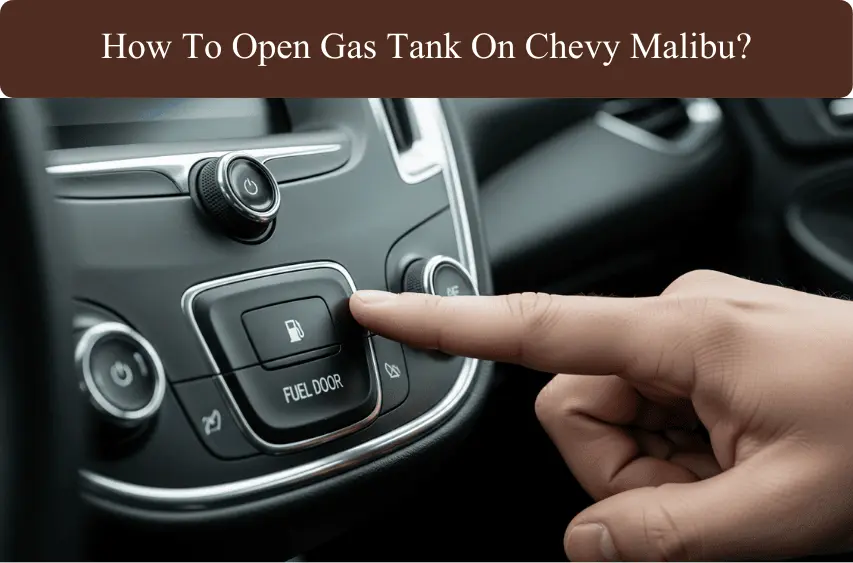
Electronic Release Button Locations (2013–2023)
For the vast majority of Malibus on the road today, the release is electronic. However, the button’s location shifted during these years.
- 2016–2023 Models: Look at the driver’s side door panel. You will find the fuel pump icon button located in the lower storage pocket, often near the trunk release button.
- 2013–2015 Models: The release button is typically located on the center console or the dashboard, to the left of the steering wheel.
In these systems, pressing the button sends an electrical signal to a solenoid in the fuel filler housing, which retracts the pin and allows the door to spring open.
Manual Floor Release Levers (2000–2012)
Older generations of the Chevy Malibu use a purely mechanical system. If you drive a model from 2000 to 2012, look down at the floor to the left of the driver’s seat. You will see a small lever marked with a gas pump icon. Pulling this lever up puts tension on a cable that physically unlatches the fuel door.
These older mechanical systems are reliable, but they rely on you knowing exactly where components are hidden. Locating these manual levers can sometimes be as tricky as finding other specific components on older models, such as knowing where is the catalytic converter located on a chevy cavalier. Once you pull the lever, you should hear a distinct “thump” from the rear passenger side, indicating the door has unlatched.
Step-by-Step: How to Refuel Your Chevy Malibu
Once you have successfully opened the outer fuel door, the actual process of getting fuel into the tank varies depending on whether your car is equipped with a modern capless system or a traditional cap.
Understanding the Capless Fuel System (2023–2024)
Newer Malibus feature a capless fuel system. When you open the fuel door, you won’t see a black plastic cap to unscrew. Instead, you will see a metal flap sealing the filler neck.
To refuel, simply insert the gas pump nozzle directly through the metal flap. It is designed to open only when a standard unleaded fuel nozzle is inserted. Push the nozzle in fully until it rests on the lip of the filler neck.
Important Note: Do not try to push the flap open with your fingers or a funnel that isn’t specifically designed for it. The system has two flaps (an outer and an inner one) to prevent fumes from escaping. If you need to add fuel from a portable gas can, you must use the special funnel located in your trunk (usually under the cargo floor with the spare tire).
Removing and Securing a Traditional Gas Cap
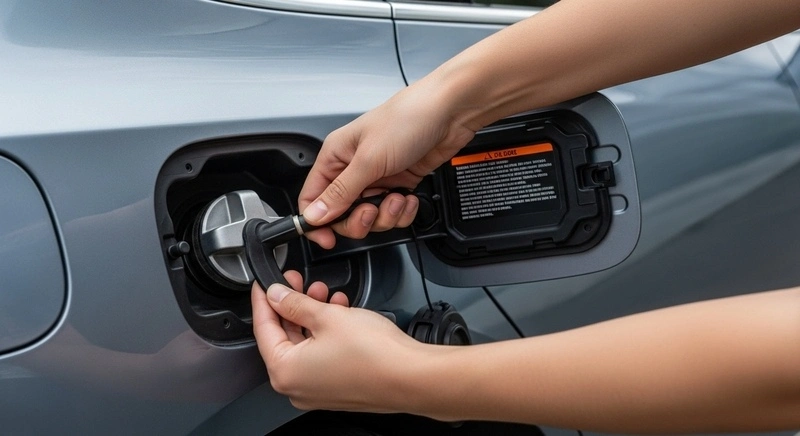
For models prior to 2023, you will likely encounter a standard screw-on gas cap. Turn the cap counterclockwise (to the left) to unscrew it.
Most factory gas caps are attached to the vehicle by a plastic tether. Do not let the cap dangle against the side of your car, as fuel residue can damage the paint. Instead, look for the small hook or holder on the inside of the fuel door itself. Hang the tether there while you pump.
When you are finished, tighten the cap clockwise until you hear at least one audible “click.” This click is crucial—it confirms the tank is sealed. If you fail to tighten it properly, your car’s computer may detect a leak in the evaporative emissions system, triggering a Check Engine Light.
Troubleshooting: What to Do If the Gas Tank Won’t Open
There are few things more stressful than watching your fuel gauge hit “Empty” while standing outside a locked gas door that refuses to budge. Whether it is due to a dead battery, a blown fuse, or a frozen latch, mechanical failures happen. Before you panic or pry at the door with a screwdriver (which damages the paint), try these diagnostic steps.
Diagnosing Electronic Release Failures
If you press the release button on the driver’s door or dashboard and hear absolutely nothing—no click, no whir—the problem is likely electrical. In many modern cars, the fuel door release is powered by a specific fuse. Consult your owner’s manual to locate the fuse box, usually found under the dashboard or in the engine bay. A blown fuse costs pennies to replace and is often the culprit.
If the fuse is fine, the issue might be the button itself or the wiring. Spilled coffee on the center console (for 2013–2015 models) or rain entering the door panel window switch (for newer models) can corrode the contacts over time.
How to Fix a Stuck or Frozen Fuel Door
Sometimes the mechanism works fine—you can hear the solenoid click—but the door stays shut. This is common in winter. Moisture can get into the hinge or latch pin and freeze solid.
If you suspect it is frozen, do not force it. Gently push against the fuel door with the heel of your hand to break the ice seal. You can also try pouring slightly warm water over the door (never boiling) to melt the ice. To prevent this from happening again, wipe the rubber seals dry after washing your car in winter.
Emergency Manual Release Method
If the electronic actuator has completely failed, or your battery is dead, you can still open the tank manually. Chevy engineers included a fail-safe, though they tucked it away inside the trunk.
Open your trunk and look at the carpeted lining on the same side as the fuel door (the passenger side). You will typically see a small cut-out or a removable trim panel. Pull back the carpet carefully. Behind it, you should see a manual release cable or a lever. Pulling this cable gently will mechanically retract the pin holding the fuel door shut, allowing it to pop open without any electrical power.
Common Fuel System Issues and Maintenance
The fuel system is generally low-maintenance, but small negligences can lead to annoying dashboard warning lights. Taking care of the hardware ensures you won’t be stuck at the pump in the future.
Importance of the Check Engine Light and Loose Caps
The most common “car problem” related to refueling isn’t a broken part, but user error. As mentioned earlier, modern cars monitor the pressure inside the fuel tank strictly. If you leave the gas cap loose, or if the capless flapper doesn’t seal correctly because of debris, fuel vapors escape.
The car’s computer (ECU) detects this drop in pressure and assumes there is a leak in the system. If you ignore a loose cap, the computer may register a leak and trigger a generic error or even a specific 7ea engine code, which often requires a scanner to clear. Always double-check that your cap clicks or that the capless flap is free of dirt.
Lubricating the Fuel Door Hinge and Latch
To keep the mechanical parts moving freely, apply a small amount of silicone spray lubricant to the fuel door hinge and the retractable latch pin every six months. Avoid using heavy grease, which tends to attract dirt and grit, eventually making the sticking problem worse.
2024 Chevy Malibu Fuel Efficiency and Tank Specifications
Knowing your vehicle’s capacity helps you plan road trips effectively. The 2024 Chevy Malibu comes equipped with a 15.8-gallon fuel tank. Paired with the efficient 1.5L Turbo engine, this sedan offers impressive range.
Drivers can expect approximately 27 MPG in the city and up to 35 MPG on the highway. This gives you a theoretical highway driving range of over 550 miles on a single tank, minimizing how often you need to worry about opening that fuel door in the first place.
Safety Precautions During Refueling
Refueling is a routine task, but it involves handling highly flammable liquid. Always follow these standard safety protocols:
- Turn Off the Engine: Never leave your car idling while pumping gas.
- Discharge Static: Touch a metal part of your car (like the door frame) before touching the nozzle to discharge any static electricity built up on your clothes.
- Do Not Top Off: Once the pump clicks off automatically, do not keep squeezing the handle. Overfilling can flood the EVAP carbon canister, leading to expensive repairs.
FAQs
No. It varies by generation. Older models (2000–2012) use a floor lever, mid-generation models (2013–2015) use a console button, and newer models use either a door panel button or a push-to-open latch.
You will need to use the emergency manual release cable located behind the carpet trim in the trunk on the passenger side.
No, the 2024 Malibu uses a capless fuel filler system. You simply insert the nozzle through the self-sealing flap.
This often happens if the nozzle isn’t inserted fully or if the angle is incorrect. On capless systems, ensure the nozzle has pushed past both internal safety flaps to allow fuel to flow smoothly.