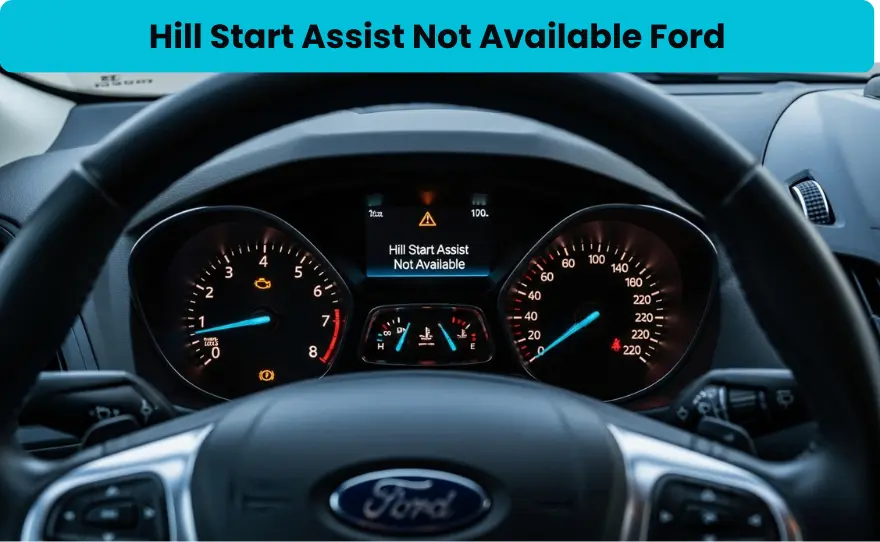
Hill Start Assist Not Available Ford: Causes, Symptoms, and Expert Fixes
Few things are more stressful than stopping on a steep incline and feeling your car start to roll backward when you release the brake. Ford vehicles use a dedicated safety feature to prevent this exact scenario. However, many drivers eventually encounter the frustrating “Hill Start Assist Not Available” warning message on their dashboard.
When this error pops up, your vehicle is telling you that a communication failure has occurred within its electronic stability or braking network. You can still drive the car, but you will lose the automatic anti-roll protection. Understanding what triggers this fault is the first step toward a proper repair.
What Is the Hill Start Assist System in Ford Vehicles?
Hill Start Assist is an automated safety feature designed to make driving on hilly terrain safer and less stressful. It acts as a temporary electronic handbrake, giving you enough time to move your foot from the brake pedal to the accelerator without the vehicle slipping backward.
How Does Hill Assist Control Work?
The system relies on a network of highly sensitive components working together in real-time. When you come to a complete stop on an uphill slope, incline detection sensors calculate the exact angle of the road.
If the slope is steep enough, the Engine Control Unit (ECU) signals the Anti-lock Braking System (ABS) module. The ABS module then holds the brake pressure for about two to three seconds after you take your foot off the brake pedal. As you press the gas and engine traction builds, the system smoothly releases the brakes, allowing you to drive forward without rolling.
What Does the Hill Start Assist Warning Light Mean?
It is completely normal for the hill assist icon to flash briefly while you are driving on a slope. This simply means the system is actively holding the vehicle.
However, if the warning light turns solid and a message appears on your dashboard stating the feature is unavailable, you have a problem. This solid light indicates that the ECU has detected faulty data or a hardware malfunction, forcing the computer to disable the driver assistance system as a safety precaution.
Symptoms of Hill Start Assist Failure
When the hill start assist fails, you will immediately notice a change in how your Ford handles inclines. The most obvious symptom is that your vehicle will roll backward on a steep or slippery slope the moment you release the brake pedal.
You might also experience hesitant acceleration, especially if you drive a manual transmission, as you struggle to manually balance the clutch and the throttle. Additionally, a hill assist failure rarely happens in isolation. You will likely see other dashboard warning lights illuminate at the same time, such as the ABS light, the Traction Control light, or the Check Engine light.
Common Causes For the “Hill Start Assist Not Available” Error
Because the hill assist system relies on so many different parts of the car, several different issues can trigger the warning message.
Faulty Wheel Speed and Incline Sensors
Sensor failure is the most common reason for this error. Your Ford uses wheel speed sensors and incline sensors to figure out exactly what the car is doing. Because these sensors are located near the wheels and under the chassis, they are exposed to dirt, moisture, and road debris. If a sensor gets dirty, suffers wiring damage, or simply breaks, it sends incorrect data to the ABS module. For manual Ford models, a misaligned clutch position sensor can also trigger the exact same error.
ABS Module and Brake Pressure Misreads
The hill assist feature cannot work without the ABS control unit. The ABS is responsible for physically holding and releasing the brake fluid pressure. If your vehicle has low brake fluid, a failing pressure sensor, or air trapped inside the brake lines, the ECU will assume your brakes are compromised. It will immediately disable the hill assist function to prevent further damage.
Battery and Electrical Issues
Modern Ford vehicles are essentially driving computers. They require a strong, consistent electrical voltage to function correctly. A weak or dying battery can cause voltage drops across the entire vehicle. When the voltage drops too low, the electronic stability control (ESC) and traction networks do not get the power they need, causing the hill assist to shut down entirely.
Software Glitches and ECU Communication Errors
Sometimes the mechanical parts are perfectly fine, but the computer software fails. The different control modules in your car talk to each other over a network. If there is a communication glitch, or if your software is outdated, the system gets confused. An unexpected diagnostic trouble code, such as a 7EA Engine Code, can clog the data network and trigger a chain reaction of electrical warnings that inadvertently turn off your hill assist.
Engine or Transmission Problems
If your Ford experiences a severe engine misfire or a transmission slip, the main computer will force the car into “limp mode.” Limp mode intentionally restricts engine power to protect the drivetrain from catastrophic failure. When this happens, the ECU automatically disables all non-essential features, including the hill start assist.
How to Fix a Ford Hill Start Assist Warning Light Issue
Fixing a hill start assist error requires a step-by-step diagnostic process. Because the issue can stem from software glitches, electrical drops, or physical brake problems, mechanics start with the easiest solutions before replacing expensive parts.
Restarting the Car and System Reset
Sometimes, the vehicle’s computer simply experiences a temporary logic error. Before you panic, try a basic system reset. Pull over safely, turn off the ignition, and wait for about 30 seconds. This brief pause allows the electronic modules to power down completely. Restart the engine. If the warning light disappears, it was likely a minor software hiccup.
Inspect and Replace Faulty Sensors
If the dashboard warning remains, a mechanic will connect an OBD-II diagnostic scanner to your Ford’s computer. This tool reads live data from the vehicle and pinpoints exactly which sensor is failing.
Usually, the diagnostic scan points to a bad wheel speed sensor or a faulty incline sensor. Technicians will inspect the sensor’s wiring for corrosion or damage. If the sensor itself is broken, replacing it and clearing the error codes will fully restore your hill start assist functionality.
Battery Check and Replacement
Because the electronic stability control (ESC) system demands strong electrical power, a weak battery is a frequent hidden culprit. Mechanics use a multimeter to test the battery’s resting voltage and charging health. If the battery falls below 12 volts, it cannot support complex driver assistance systems. Cleaning corroded battery terminals or replacing a dying battery entirely often fixes the warning light immediately.
Brake System Upkeep and ABS Control Unit Maintenance
Your hill assist relies heavily on the physical braking components and the ABS control unit. Mechanics will check your brake fluid levels, inspect the brake lines for air bubbles, and examine the brake pads and rotors.
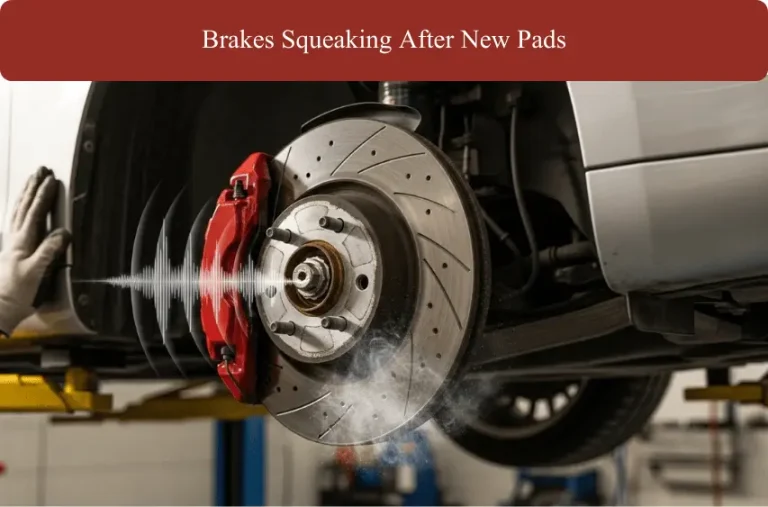
If you recently had your brakes serviced, it is crucial to ensure all parts are seated correctly. Sometimes, mechanical friction—like dealing with brakes squeaking after new pads—points to improper hardware installation. This excessive vibration can physically disrupt the sensitive ABS wheel speed sensors mounted nearby, tricking the computer into disabling the hill assist feature. Keeping the ABS module clean and the brake fluid topped off ensures the system can hold pressure safely.
Traction Control or ESC Repair
If the sensors and brakes look good, the problem might live within the traction control system. The ESC system works alongside the ABS to keep your car stable. If the ESC module fails or loses its calibration after a severe bump in the road, a technician must recalibrate the electronic stability control system using specialized dealership software.
Dealership Software Updates
Automakers frequently release software updates to fix known bugs in the Engine Control Unit (ECU). If your Ford has outdated software, the computer might mistakenly trigger the hill assist warning. Visiting a certified Ford dealership allows technicians to download the latest OEM patches directly into your vehicle’s computer, permanently resolving these specific logic errors.
Methods to Prevent Sliding When Hill Start Assist Is Unavailable
If you have to drive your Ford before getting it repaired, you must manually prevent the car from rolling backward on steep inclines. Use these three proven driving methods to safely manage hill starts:
- Engage a Low-Speed Gear: Shift your transmission into a low gear (like 1 or L). The engine provides maximum traction and resistance in low-speed mode, naturally fighting gravity and preventing the vehicle from sliding backward.
- Apply Firm Braking Force: Press the brake pedal firmly while waiting on a slope. This ensures the brake lines have sufficient pressure built up, giving you a tiny fraction of an extra second when moving your foot to the accelerator.
- Use the Handbrake Technique: This is the safest method for steep slopes. Pull your emergency handbrake up. As you press the gas pedal and feel the engine begin to pull the car forward, slowly release the handbrake. This manually replicates exactly what the hill start assist does electronically.
Which Ford Models Face the Most Hill Start Assist Issues?
While any modern vehicle can experience sensor failure, certain Ford models report this specific warning light more frequently. Owners of the Ford Focus, Ford Escape, Ford Fiesta, and Ford Ranger frequently encounter the “Hill Start Assist Not Available” message. These models rely heavily on highly integrated electronic modules that are particularly sensitive to minor battery voltage drops and dirty wheel speed sensors.
Is It Safe to Drive with the Hill Assist Warning Light On?
Yes, it is generally safe to drive your vehicle on flat roads with this warning light illuminated. The core braking system still works. However, driving becomes much riskier in hilly cities or stop-and-go mountain traffic. You must remember that the car will roll backward the moment you release the brake.
If the hill assist warning light turns on alongside the ABS light or a flashing Check Engine light, pull over immediately. This combination means your primary safety and braking systems are actively failing.
FAQ’s
While experienced drivers can easily manage steep inclines without it, hill start assist is highly recommended for modern driving. It significantly reduces driver stress in heavy traffic and prevents minor fender benders caused by rolling backward into the car behind you.
No, the hill start assist function in Ford vehicles cannot be manually disabled by the driver. It is deeply integrated into the ABS and traction control networks and remains activated by default as a permanent safety feature.
The total repair cost depends entirely on the root cause. If a mechanic only needs to replace a dirty or faulty wheel speed sensor, expect to pay between $150 and $400, including labor. However, if the diagnostic scan reveals a failed ABS control unit or requires extensive wiring harness repairs, the total bill can quickly exceed $1,000. Always ask for a detailed diagnostic readout before authorizing major repairs.