Bad Timing Chain Symptoms, Causes, and Solutions
Your car’s engine relies on perfect timing to run smoothly. Deep inside the motor, a crucial component works hard to keep every moving part in perfect sync. But when this part begins to fail, the resulting damage can be severe. If you ignore the warning signs, you might end up needing a completely new engine.
This guide breaks down exactly what you need to know about bad timing chain symptoms, what causes these mechanical failures, and how you can fix the problem before it empties your wallet.
What Is a Timing Chain?
Think of the timing chain as the vital mechanical link between the top and bottom halves of your engine. It is a heavy-duty, bicycle-style metal chain located inside the engine block.
Its primary job is to connect the crankshaft—which pushes the pistons up and down—to the camshaft, which opens and closes the engine valves. By locking these two spinning shafts together, the timing chain ensures they rotate in absolute harmony.
Why Is the Timing Chain So Important?
Timing is everything in an internal combustion engine. The engine valves must open at the exact right millisecond to let air and fuel in, and then close tightly before the piston pushes upward to create combustion. If this synchronization is off by even a fraction of a second, the engine simply will not run correctly.
Unlike a rubber timing belt that you usually need to replace every 60,000 miles, automakers design metal timing chains to last the lifetime of the vehicle. However, they are not invincible.
Many modern vehicles use what mechanics call an “interference engine.” In this specific engine design, the pistons and valves share the same physical space inside the cylinder, just at different times. If the timing chain breaks and disrupts this dance, the pistons will smash violently into the open valves, destroying the engine from the inside out.
7 Common Bad Timing Chain Symptoms
Catching engine trouble early is the absolute best way to avoid a massive auto repair bill. As a timing chain wears out over years of driving, it stretches out and loses its tight grip on the engine gears. When this happens, your vehicle will start dropping clear mechanical hints. Here are the top warning signs to watch out for.
1. Rattling Noise from the Engine
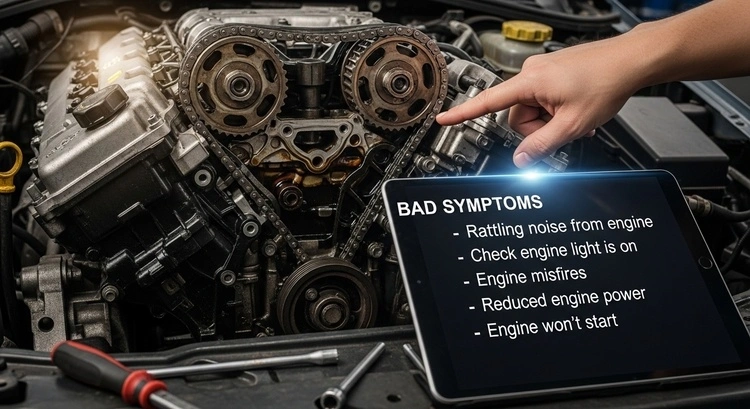
The most obvious sign of timing chain trouble is a harsh, metallic rattling sound coming from the front of your engine block. You will usually hear this clatter when you first start the car cold in the morning, or while the engine rough idles at a stoplight.
As the metal chain stretches, it creates dangerous slack. This loose chain then physically slaps against the metal timing cover and the plastic guides inside the motor. It is important to identify noises accurately. For example, if you notice a metallic rattle, it points to internal engine timing, whereas a squeaking noise while driving but not brakes applied usually points to external issues like a worn serpentine belt or suspension components. If you hear that distinct internal engine rattle, have a professional inspect the timing system immediately.
2. Engine Misfires and Rough Idling
As the timing chain stretches over time, it loses its tight grip on the engine gears. If the chain develops enough slack to skip even a single tooth on the camshaft sprocket, the engine’s mechanical timing falls completely out of sync. This forces the valves to open and close at the wrong moments. As a result, the engine stutters, shakes, and misfires. You will easily feel a rough, vibrating idle and a jerky hesitation when you step on the gas pedal.
3. Check Engine Light Illuminates
Modern cars rely on a central computer to monitor every moving part. Highly sensitive sensors constantly track the exact rotational position of the camshaft and the crankshaft. If a loose timing chain causes these two parts to fall out of perfect alignment, the computer instantly detects the error. It will immediately trigger your Check Engine Light and store specific diagnostic trouble codes, such as P0016, to warn your mechanic about the internal timing issue.
4. Metal Shavings in the Oil
A failing timing chain whips around violently inside the engine block. As it aggressively slaps against the metal timing cover and the plastic chain guides, it slowly grinds away tiny pieces of material. When you drain the engine oil during a routine service, you might spot shiny metallic flakes or shavings in the old fluid or trapped inside the oil filter.
This severe metal contamination is a massive red flag that your timing components are failing.
5. Unexplained Drops in Oil Pressure
Inside the engine, pieces of broken plastic chain guides or shaved metal can snap off entirely. This dangerous debris often falls directly down into the oil pan. From there, the chunks can easily clog the screen on the oil pump pickup tube. When the oil pump cannot pull enough oil through the blocked screen, your engine oil pressure suddenly drops. A low oil pressure warning on your dashboard requires you to shut down the engine immediately to prevent total destruction.
6. Poor Engine Performance
An engine running with a stretched timing chain simply cannot burn fuel efficiently. Because the combustion process is no longer optimized, you will notice a severe drop in everyday performance. The car will feel incredibly sluggish and lack power when you try to pass someone on the highway. Additionally, your fuel economy will tank, causing you to burn more gas than usual.
7. The Engine Won’t Start
This is the absolute worst-case scenario. If you ignore the warning signs like rattling noises and misfires, a severely worn timing chain will eventually snap in half. If the metal chain breaks while you are driving, the engine will instantly die. If it breaks while parked, the engine will not start at all. You might hear the starter motor spinning freely, but without an intact timing chain to turn the camshaft, the motor cannot run.
What Causes Timing Chain Problems?
Timing chains are incredibly tough, but certain factors will drastically shorten their lifespan.
- Lack of Maintenance: Skipping routine oil changes is the number one engine killer. Old oil turns into thick, gritty sludge. This sludge creates massive friction and rapidly wears down the metal chain links.
- Faulty Tensioners or Guides: Your chain relies on hydraulic tensioners to stay tight. If these tensioners lose oil pressure or fail, the chain instantly develops dangerous slack.
- High Mileage: Even with perfect maintenance, the metal pins and links naturally stretch and weaken after hundreds of thousands of miles on the road.
What to Do If You Suspect a Timing Chain Problem
If you hear a cold-start rattle or experience engine misfires, do not ignore it. Driving with a compromised timing system is a huge gamble.
- Inspect the Timing Chain: Have a qualified mechanic perform a visual inspection and a professional diagnostic scan immediately.
- Replace the Timing Chain: Keep in mind that this is a complex, labor-intensive repair that requires opening up the engine block.
- Check Related Components: Never just replace the chain itself. Always install a complete timing kit that includes new tensioners, plastic guides, and sprockets to guarantee long-term reliability.
How to Prevent Timing Chain Failure
Preventative maintenance is always cheaper than replacing a blown motor.
- Maintain Regular Oil Changes: Clean, fresh oil ensures proper hydraulic tension and dramatically reduces metal-on-metal friction.
- Use Quality Oil: Always pour in the exact viscosity and synthetic oil grade your vehicle manufacturer recommends.
- Listen to Your Engine: Catching a faint morning rattle early saves you from catastrophic engine failure down the line.
Final Thoughts
Your timing chain serves as the mechanical heartbeat of your engine. While automakers build it to go the distance, it still requires clean oil and keen attention to survive. If you notice any bad timing chain symptoms, schedule a professional inspection right away to keep your car running strong for years to come.