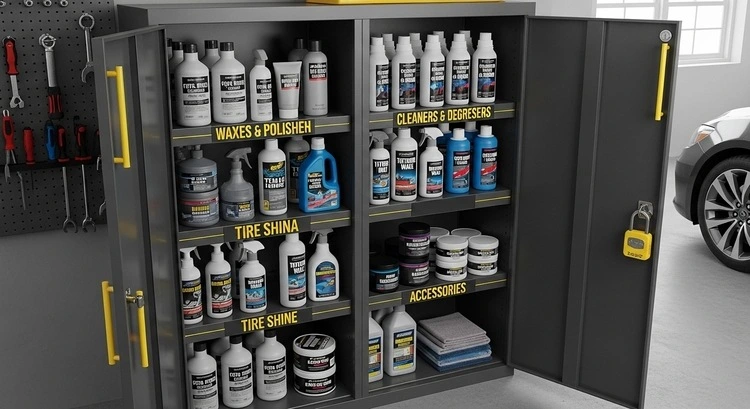
Keeping Auto Care Supplies Safe, Clean, and Out of the Way
Auto care supplies have a way of gradually accumulating wherever there is space to put them. Cleaning fluids, oils, tools, and accessories find their way to garages, closets, and utility spaces—and pretty soon leaks, spills, smells, and clutter have begun to intrude well beyond the vehicle. What’s the problem? Good supplies, no doubt, but also the question of how to store them. In this article, we take a long-form look at the storage issue of auto care supplies: Why should they have a more special touch than ordinary household goods? How does messy storage lead to different kinds of mess or damage? Which products require special containment? And how do you rig up a storage solution that keeps your auto care supplies under wraps, while still letting you access them as needed for maintenance? The aim is routine access with clean, safekeeping in mind.
How improper storage causes mess and damage
Auto care supplies are designed to work on vehicles, not to sit safely in shared household spaces. When fluids, sprays, and tools are stored without containment, small leaks turn into stains, fumes spread into living areas, and incompatible products end up side by side. Temperature swings in garages or closets can also degrade chemicals, making them less effective or even hazardous over time. The mess often builds slowly, which is why it goes unnoticed until cleanup becomes a bigger project than maintenance itself. To prevent this, many people move excess or seasonal supplies into controlled spaces like Peoria Ave storage NSA Storage, keeping only what’s actively used at home. Recognizing how improper storage creates both damage and risk helps shift auto care supplies into a category that deserves structure, not convenience.
What products need the most protection
Not all auto care items carry the same risk. Knowing which ones need extra attention makes storage safer and simpler.
Essential Principles to Follow:
- Protect liquids and chemicals first
Oils, cleaners, and solvents should always be sealed and upright. - Isolate absorbent materials
Cloths, sponges, and pads can trap fumes or leaks if stored together with liquids. - Secure sharp or heavy tools
Tools should be contained to prevent injury and accidental damage.
Common Pitfalls to Avoid:
- Storing chemicals near heat sources
- Mixing open containers with fabrics
- Leaving supplies on open shelves
- Forgetting expiration dates on products
Setting up a clean, contained storage zone
Step 1: Choose a single location dedicated only to auto care supplies. Keeping everything in one zone prevents chemicals and tools from drifting into living areas.
Step 2: Separate liquids from tools and accessories. Fluids should be stored upright in leak-resistant bins, while tools stay dry and accessible.
Step 3: Remove surplus or rarely used products from the home. Many people rely on options like Peoria Ave storage NSA Storageto keep excess supplies secure without crowding garages or closets.
Step 4: Label containers clearly. Knowing what’s inside each bin reduces unnecessary handling and prevents spills during searches.
Step 5: Add a simple reset habit after use. Returning supplies to their assigned spot keeps the zone clean and predictable.
Preventing spills and cross-contamination
How can leaks be contained before they spread?
Secondary containment works best. Bins with raised edges catch small leaks before they reach floors or shelves.
Should chemicals be stored together?
Only compatible products should share space. Separating cleaners, oils, and solvents reduces risk.
How often should storage be checked?
A quick monthly check is enough. Regular reviews catch leaks or degradation early.
Adjusting storage as supplies change
Auto care supplies evolve as vehicles change, habits evolve, and products keep getting added or deleting. What used to fit neatly into a tidy compartment can become crowded and unsafe if storage isn’t updated regularly. Adjusting a setup regularly keeps supplies contained and prevents old, mismatched items from taking up valuable space. Moving small things, like old bottles of oil or cleaning fluid, out of utility compartments or shuffling bins along the way out to the garage, routinely keeps a storage system useful, without making a project of it, and allows things to be returned easily after being borrowed.
Review your auto care supplies twice a year and remove anything you no longer use.
Questions people ask about storing car supplies
A cool, dry, well-ventilated area away from living space works best. Containment matters as much as location.
Yes, if temperatures are stable and products are sealed properly. Extreme heat or cold can cause issues.
Use airtight containers and avoid open shelving. Proper containment reduces odor and exposure.
Whenever new supplies are added or products expire. Regular updates prevent mess and risk.