How Proper Mirror Adjustment Prevents the Most Common Types of Collisions
Lane changes. Merging onto highways. Reversing out of parking spots. All types of collisions that drivers deal with every single day. Most of them are completely preventable with the proper mirror adjustment.
Setting up your mirrors only takes seconds. Adjusting them correctly could save your life.
Mirror Adjustment and Collisions: The Basics
The unfortunate truth about driving is that most drivers set their mirrors once when they first get their license and never adjust them again. This seems like harmless behaviour, but it actually leads to thousands of collisions every year.
All collisions are preventable but there are specific types of crashes that are caused by improper mirror adjustment. These accidents happen when drivers change lanes without noticing the vehicle next to them, merge incorrectly or reverse out of a parking spot without seeing what’s behind them.
Properly positioned mirrors allow you to see those hidden areas around your vehicle. They eliminate blind spots and drastically reduce your chances of getting into a collision.
Ready to adjust your mirrors like a pro? Let’s dive in.
You’ll learn:
- Why adjusting your mirrors is way more important than most people think
- The 3 most common types of collisions caused by improper mirrors
- Step-by-step instructions for setting up your mirrors
- How professional driving lessons make all the difference
Why Adjusting Your Mirrors Is Important
Believe it or not, adjusting your mirrors correctly is one of the most fundamental aspects of safe driving. It’s like building a house on a weak foundation. If you don’t have the basics down, nothing else matters.
Let’s go ahead and talk about what happens when drivers don’t adjust their mirrors correctly.
Problem: Most People Have Bad Mirror Setups From Day 1
Here’s the issue. When drivers adjust their mirrors for the first time, they position them incorrectly. As a result, they don’t see the areas around their vehicle that are hidden by blind spots.
You have blind spots. Everyone does. But properly adjusted mirrors reduce those blind spots to the point where they’re nearly eliminated.
That’s why professional driving instructors at a quality driving school in West Springfield, MA teach their students how to adjust their mirrors correctly before they even turn the vehicle on. Proper behind-the-wheel training allows students to build correct muscle memory with tasks like checking their mirrors.
Just think about how dangerous it would be if you never learned how to adjust your mirrors.
You’d be creeping down the road partially blind. Lane changes would become scary. Merging would be guesswork. Even backing up would be risky.
Traffic crashes involving lane changes injure about 540,000 people each year. That’s right around half of a million collisions that could be prevented with the right mirror positioning and good mirror-checking habits.
Still not convinced? The IIHS found that proper mirror adjustment reduced lane change injury crashes by 23% when paired with blind spot technology.
Eliminating blind spots is crucial for safe driving. And you can do that by setting up your mirrors the right way.
The 3 Collisions Caused By the Most Mirrors Adjustments
Lane change crashes are a huge issue but there are two other categories of collisions that improper mirror adjustment cause.
- Merge crashes
- Backing collisions
Lane Change Collisions
Lane changing crashes are when you switch lanes and don’t see the vehicle that’s driving next to you. You might check your mirror real quick and think that you have enough room to move over. But since your mirrors aren’t adjusted properly…
You get side-swiped.
Okay, so they’re not always THAT dramatic. But these crashes happen all the time, especially on highways.
Solution? Properly adjusted mirrors that show you the adjacent lanes and the habit of turning to check your blind spot.
Merge Crashes
Drivers who merge without properly adjusted mirrors can’t see the vehicles in the lane they’re trying to merge into. They also don’t have a proper view of traffic behind them in that lane.
Merges require split-second decision-making. No driver wants to get hit when they move over. But when mirrors aren’t adjusted correctly…
Drivers don’t have enough information to make a safe merge.
Correctly adjusted mirrors provide drivers with a wide view of the lanes around them. This makes safe merges much easier.
Backing Up Accidents
Okay, this one might surprise you, but backing up accidents are also caused by incorrect mirror adjustment.
Every vehicle has a large blind spot directly behind the trunk. This area can conceal children, pets, bicycles, and even cars.
When your rearview mirror is adjusted correctly, it allows you to see directly behind your vehicle. Pair that with properly adjusted side mirrors and a quick shoulder check…
…and you dramatically reduce your risk of a backing collision.
How to Adjust Your Mirrors Correctly Every Time
Now it’s time to learn how to adjust your mirrors the right way. This will take you less than a minute but it will pay off when you’re driving down the road.
Rearview Mirror
Adjust your rearview mirror so that you can see the entire rear window clearly. You shouldn’t have to move your head forward or backward to see through the center of the mirror.
The center of the rearview mirror should show you a full view of the lane behind your car.
Driver’s Side Mirror
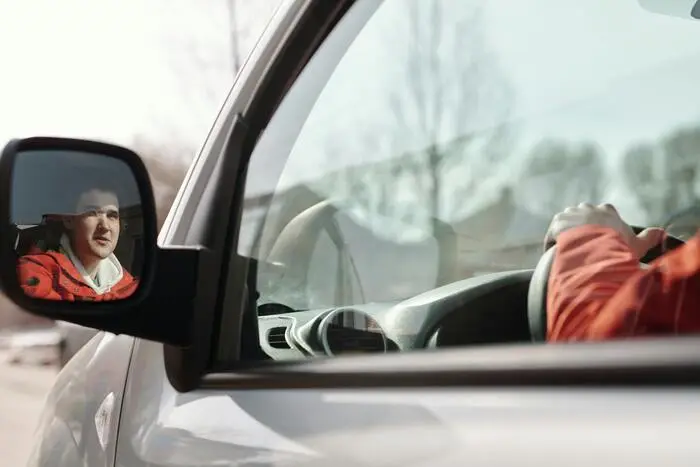
Lean your head towards the driver’s window and place your head on the center console. Adjust the driver’s side mirror until you can barely see the side of your car.
Repeat this step for your passenger side mirror.
When you adjust your mirrors this way, they will overlap and create a nearly seamless view around your entire vehicle.
Cars will instantly exit your rearview mirror and appear in your side mirrors.
And that’s pretty much it. You’ll want to readjust your mirrors every time someone else drives your car or you change your seat position.
Mirror Adjustment and Professional Driving Lessons
Reading about how to adjust your mirrors is one thing. But being able to adjust them in real driving situations is a totally different story.
Drivers need professional training so that they learn to handle their vehicle correctly from day one. Proper behind-the-wheel training ensures that new drivers learn:
- How to adjust their mirrors
- When to check their mirrors
- How to use their mirrors to stay safe on the road
Learning from a certified instructor is the best way to build good habits. You never know. Those good habits could save your life one day.
Wrapping It All Up
So there you have it.
Correctly positioning your mirrors is simple and one of the best ways to avoid common types of collisions. Here’s your listicle of magical mirror facts:
- Blind spots cause collisions when lane changing, merging, and backing up
- Proper mirror adjustment reduces blind spots
- Always adjust your mirrors if the driver’s position changes
- Professional driving instruction teaches proper habits
Adjust your mirrors before your next trip. It’ll keep you safe on the road.