Car Leases Under $200 a Month No Money Down: The Complete 2026 Guide
Finding a car lease for under $200 a month feels like searching for a needle in a haystack right now. We all know that inflation and supply chain issues have pushed car prices up. In 2026, the days of walking onto a lot and easily picking out a cheap daily driver seem almost gone. But they aren’t completely extinct.
If you are willing to look at specific models and have the patience to hunt for the right promotion, these deals still exist. You don’t need to break the bank to drive a reliable vehicle. Whether you are a student, a city commuter, or just someone trying to tighten their budget, affordable leasing options are still on the table. This guide breaks down exactly which cars you can drive for less than $200, how to avoid hidden fees, and the specific steps to secure a zero-down deal.
What Does “No Money Down” Actually Mean?
Marketing language can be tricky, and dealerships are experts at using it. When you see an advertisement screaming “No Money Down,” it is easy to assume you can walk into the dealership, sign a paper, and drive off without spending a penny. Unfortunately, that is rarely the case.
“No Money Down” specifically refers to the capitalized cost reduction. In simple terms, this means the dealer isn’t requiring you to make a large down payment to reduce the price of the car upfront. You aren’t putting $3,000 cash on the hood just to get your monthly payment lower. However, this doesn’t cover the other administrative expenses required to make the contract legal.
The “Sign and Drive” Distinction
It is crucial to understand the difference between a standard “zero down” lease and a true “Sign and Drive” event.
Most no-money-down offers still require you to open your wallet before you get the keys. You are paying for the paperwork, not the car itself. On the other hand, Sign and Drive leases are rare promotions where the dealer rolls absolutely everything into the monthly payments. With those specific deals, you truly pay $0 at the dealership. These are much harder to find in 2025 and often require excellent credit scores.
The Reality of Upfront Costs
So, if you aren’t paying a down payment, what are you paying? Even with a great lease offer, you should prepare to pay several fees the day you sign the contract.
Dealers almost always require the first month’s payment immediately. You will also need to cover registration fees, title fees, and the dealership’s documentation fee, which varies by state. If you buy the car from outside your area, you may need to cover any shipping costs; this car shipping cost calculator can help you budget for this.
Finally, depending on where you live, sales tax might be due upfront rather than rolled into your monthly bill. Always ask for an “out-the-door” estimate so you aren’t surprised by a $1,500 bill on what you thought was a free signing.
Pros and Cons of Sub-$200 Lease Deals
A cheap lease sounds amazing on paper, but it isn’t the right financial move for everyone. Before you commit to a contract for the next two or three years, you need to weigh the benefits against the limitations to ensure it fits your lifestyle.
Why It’s a Smart Move (Pros)
The biggest advantage is obvious: budget stability. A lease payment under $200 keeps your fixed monthly expenses low. This is perfect if you are on a tight budget or saving for other big life goals, like buying a house.
Another major pro is cash flow. Since you aren’t putting money down, you keep your savings in your bank account. In an uncertain economy, having cash on hand for emergencies is often smarter than tying it up in a depreciating asset like a car. Plus, you get to drive a brand-new vehicle with modern safety tech like automatic braking and Apple CarPlay, which you rarely find in used cars at this price point.
The Trade-offs (Cons)
To get a price this low, you have to accept some restrictions. The biggest trade-off is limited inventory. You won’t be leasing a luxury SUV or a high-performance truck for $199. These deals are almost exclusively for economy cars and base-model hatchbacks.
You also face strict mileage caps. Most budget leases limit you to 10,000 or 12,000 miles per year. If you have a long daily commute, this might not work. Going over that limit can cost you around 25 cents per mile, which adds up fast at the end of the lease. Finally, unlike buying, you build no equity. When the lease ends, you walk away with nothing to show for your payments.
Top Car Leases Under $200 a Month No Money Down (2025 Picks)
In 2025, inventory levels have finally stabilized, meaning manufacturers are once again offering aggressive incentives to move metal. However, you won’t find every car in this price bracket. The “sweet spot” for a zero down lease under $200 is typically a vehicle with a high residual value—meaning it holds its worth well—and a modest starting price.
Here are the models that are currently the strongest candidates for these rock-bottom lease terms.
Best Compact Sedans
For most drivers, a compact sedan is the golden ticket to a sub-$200 payment. These cars offer excellent fuel economy and surprisingly spacious interiors.
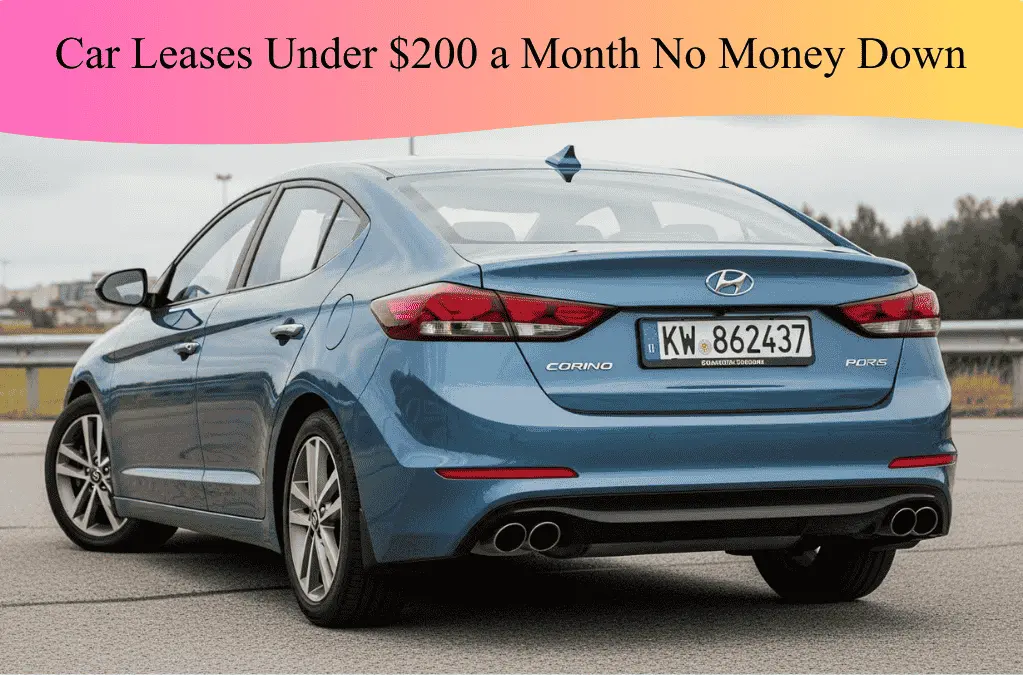
- Hyundai Elantra SE: This is often the leader of the pack. Hyundai frequently offers lease cash incentives that can be applied to your “due at signing” costs. The SE model comes standard with wireless Apple CarPlay and a fuel economy that saves you even more money at the pump.
- Kia Forte LXS: The Forte is built on a similar platform to the Elantra and offers comparable value. Kia’s famous 10-year warranty and high residual value often allow dealers to structure leases with very low monthly payments. Look for end-of-quarter sales events to snag one of these for zero down.
- Nissan Sentra S: If you want a car that feels larger than it is, the Sentra is a great pick. It has “Zero Gravity” seats that are incredibly comfortable for long commutes. Nissan is aggressive with their base model pricing, making the Sentra S one of the easiest cars to lease on a tight budget.
- Toyota Corolla LE: While Toyota deals are sometimes pricier because of their popularity, the Corolla’s legendary resale value works in your favor here. Since you are only paying for the depreciation during the lease, a car that holds its value well (like a Corolla) can sometimes cost less to lease than a cheaper car that depreciates fast.
Best Crossovers & SUVs
Getting an SUV for under $200 with no money down is the “hard mode” of car leasing. However, there are exceptions if you catch the right factory rebate.
- Chevrolet Trax LS: The redesigned Trax is a game-changer. It starts at a very low price point, making it mathematically possible to get close to that $200 mark if you have a loyalty bonus or trade-in. It gives you the SUV ride height and cargo space without the typical SUV price tag.
- Buick Encore GX: This might surprise you, but Buick often runs very aggressive lease programs to bring new buyers into the brand. While it typically leases for more, stackable incentives for current GM owners can sometimes push the effective monthly cost down into budget territory.
Best Electric & Hybrid Options
Leasing an EV or hybrid in 2025 has a secret weapon: Tax Credits.
- Nissan Leaf S: The Nissan Leaf is one of the most affordable EVs on the market. Because the federal tax credit is often passed on to the lessee as “lease cash,” it can slash the capital cost of the car instantly. This makes the Leaf one of the few cars where a sub-$200 payment is genuinely realistic without a down payment.
- Toyota Prius LE: High demand makes this tough, but the gas savings are undeniable. If you drive a lot, calculating your “effective” monthly cost (lease + gas) might make the Prius cheaper than a gas sedan, even if the lease payment is slightly over $200.
How to Qualify for These Rare Deals
Finding the car is only half the battle. To actually sign the paperwork on a “zero down” deal, you need to look like a low-risk borrower to the bank.

Credit Score Requirements
Leasing is different from buying. When you buy, a lower credit score just means a higher interest rate. When you lease, a low score can disqualify you entirely from the advertised “special” rates.
To get a true no-money-down lease, you typically need a Tier 1 credit score, which is usually 700 or higher. If your score is in the 600s, the dealer may ask for a security deposit or a down payment to offset their risk. If you are on the borderline, consider bringing a co-signer with strong credit to lock in the zero-down terms.
Stacking Incentives
The secret sauce to getting under $200 is “stacking.” This means combining multiple discounts to lower the price since you aren’t using cash to do it.
- Lease Cash: This is a rebate from the manufacturer specifically for leasing.
- Loyalty/Conquest Cash: You get a discount for already owning a car from that brand (Loyalty) or for switching from a direct competitor (Conquest).
- Special Programs: Extensive discounts are often available for recent college graduates, active military members, and first responders.
Always ask the finance manager: “What other rebates am I eligible for?” You might be surprised to find an extra $500 discount just for being a teacher or a Costco member.
Where to Find and How to Negotiate the Deal
You generally won’t find these specific deals on a flashy billboard. You have to dig for them. Start by checking the “Current Offers” or “Local Specials” page on the official manufacturer’s website, not just the dealership’s site. Aggregator sites like Edmunds or CarsDirect are also excellent for seeing what national lease incentives are currently active in your region.
Negotiation Strategy
Once you find a potential car, don’t just accept the first number they give you. Negotiating a lease is different from buying, but you still have leverage.
First, negotiate the selling price of the car, not just the monthly payment. A lower selling price equals a lower lease payment. Second, pay attention to the Money Factor. This is essentially the interest rate on a lease. Dealers can mark this up to make extra profit, so ask to see the “base money factor” to ensure you aren’t overpaying. Finally, shop at the right time. Visiting the dealership at the end of the month—or better yet, during end-of-year sales events—can drastically improve your chances, as dealers are desperate to hit their volume bonuses.
Hidden Fees and Red Flags to Watch Out For
A deal that looks too good to be true often hides expensive secrets. Always read the fine print for these common pitfalls.
Acquisition & Disposition Fees
Almost every lease includes an acquisition fee (often called a bank fee) ranging from $595 to $1,095. This is charged by the leasing company to set up the account. At the end of the lease, you might face a disposition fee (around $300-$500) just to turn the keys back in. Ensure you know these numbers before signing.
Dealer Add-ons
Watch out for “mandatory” dealer add-ons like nitrogen-filled tires, fabric protection, or VIN etching. These can add $20 to $50 to your monthly payment, instantly pushing a $199 deal over your budget. Be firm and ask for these to be removed.
Tips for Managing Your Lease to Avoid Penalties
Once you have the keys, your goal is to avoid fees when you return the car in three years.
- Watch Your Mileage: If your lease limit is 10,000 miles, check your odometer monthly. If you are trending over, stop driving it for long trips immediately. Paying the overage penalty at the end is almost always more expensive than renting a car for a weekend trip.
- Get GAP Insurance: For a zero-down lease, GAP insurance is non-negotiable. If your leased car is totaled in an accident, your standard insurance only pays the current market value. GAP covers the difference between that value and what you still owe the leasing company. Without it, you could be on the hook for thousands of dollars for a car you can’t even drive.
Conclusion
Securing a car lease for under $200 a month with no money down in 2025 is difficult, but it is not impossible. It requires flexibility regarding the car you drive, a strong credit score, and the patience to wait for the right manufacturer incentive.
By focusing on compact sedans with high residual values, stacking rebates, and avoiding hidden dealer fees, you can drive a safe, reliable, and brand-new car without wrecking your monthly budget. Read the contract carefully, negotiate confidently, and enjoy the ride.
FAQs
Generally, you need a score of 620 to qualify, but to get advertised “special” lease rates without a down payment, you usually need a score of 700 or higher.
Yes, some manufacturers offer Certified Pre-Owned (CPO) leasing. This can be a great way to get a lower payment on a slightly older vehicle, though interest rates are sometimes higher than on new cars.
No. It usually means no down payment against the car’s cost. You will likely still pay for taxes, registration, and the first month’s payment at signing unless it is a specific “Sign and Drive” offer.